
What's Happening?
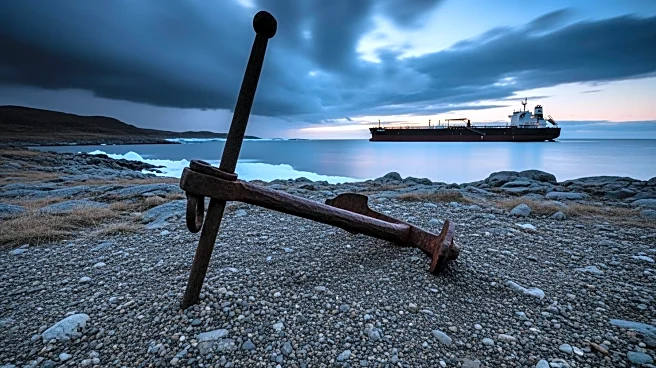
The United States has intensified its efforts to seize oil tankers involved in the Venezuelan oil trade, prompting a significant shift in the registration of these vessels. At least 26 tankers have switched
their registration to Russia since the beginning of the previous month, following the US seizure of the Skipper supertanker off the coast of Venezuela. This move is seen as an attempt by the dark fleet, which ships illicit oil globally, to seek protection under the Russian flag. The vessels, which carry oil from Russia, Iran, and Venezuela, are increasingly opting for Russian registration, with 13% already registered to Moscow. This shift is driven by the belief that Russia will provide political cover against international sanctions. The situation has escalated tensions, with a recent incident involving the US boarding a supertanker, Marinera, which had switched to a Russian flag, raising fears of a potential conflict between Washington and Moscow.
Why It's Important?
The reflagging of oil tankers to Russia highlights the growing geopolitical tensions and the strategic maneuvers by countries and companies to evade US sanctions. This development underscores the complexity of enforcing international sanctions and the challenges faced by the US in curbing illicit oil trade. The involvement of state protection in these activities elevates the issue from a compliance problem to a strategic geopolitical challenge. The situation could impact global oil markets, as it involves major oil-producing countries and affects the supply chain. Additionally, the US's aggressive stance may lead to further diplomatic strains with Russia, potentially affecting broader international relations and trade policies.
What's Next?
The US is likely to continue its crackdown on vessels involved in the Venezuelan oil trade, potentially expanding its focus to those carrying Iranian crude. This could lead to further reflagging of tankers to Russia or other countries perceived as offering protection. The international community, particularly countries involved in the oil trade, will be closely monitoring the US's actions and the responses from Russia. The situation may prompt discussions on international maritime laws and the enforcement of sanctions. Additionally, oil traders and ship owners will need to navigate the increasing risks associated with these geopolitical tensions, potentially leading to shifts in trade routes and strategies.