






What's Happening?
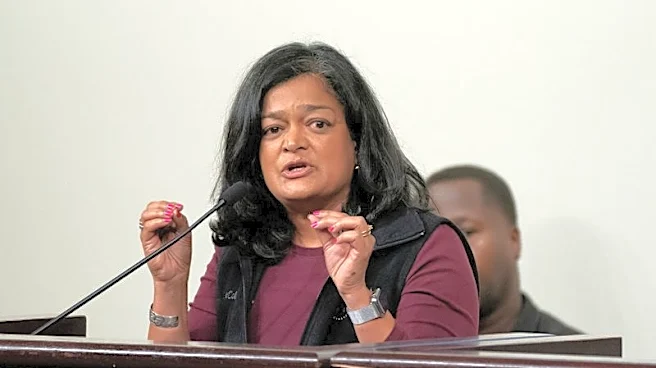
U.S. Representatives Pramila Jayapal and Jonathan Jackson have called for a permanent solution to Cuba's economic crisis following their visit to the island. They criticized the U.S. energy blockade, describing it as an 'economic bombing' that has severely
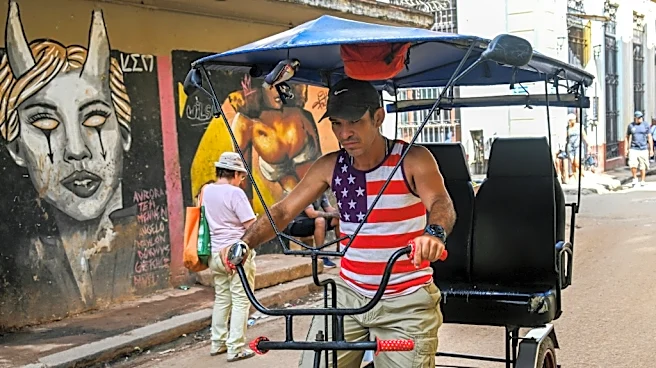
impacted Cuba's infrastructure. The lawmakers met with Cuban officials, including President Miguel Díaz-Canel, to discuss the blockade's effects and potential avenues for dialogue. The visit highlighted the ongoing humanitarian issues in Cuba, exacerbated by fuel shortages and economic sanctions.
Why It's Important?
The U.S. energy blockade on Cuba has significant humanitarian and geopolitical implications. The blockade has led to widespread shortages and economic hardship for the Cuban population, affecting essential services like healthcare and transportation. The call for a resolution by U.S. lawmakers indicates a potential shift in U.S. policy towards Cuba, which could lead to improved bilateral relations and economic recovery for the island. The situation also reflects broader debates about the effectiveness and ethics of economic sanctions as a foreign policy tool.
What's Next?
The U.S. Congress may consider legislative measures to lift or modify the sanctions against Cuba, as suggested by Jayapal and Jackson. Continued dialogue between the U.S. and Cuban governments could lead to a negotiated settlement, easing the blockade's impact. Internationally, other countries may increase their support for Cuba, providing humanitarian aid or advocating for policy changes. The outcome will likely influence U.S.-Cuba relations and the broader regional dynamics in the Caribbean.