






What's Happening?
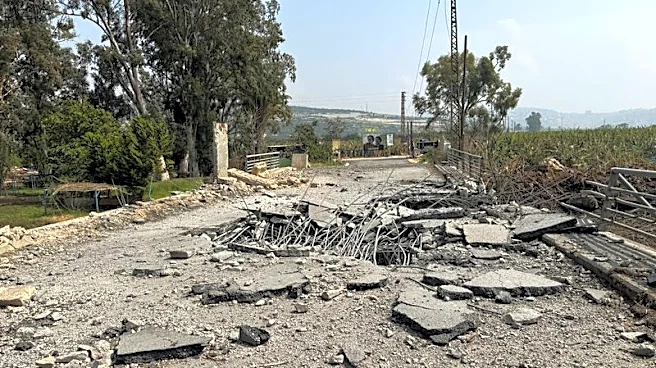
Avi Dichter, Israel's Agriculture Minister and member of the security cabinet, has disclosed that U.S. considerations are limiting Israel's actions in Lebanon. In an interview, Dichter stated that the American government has linked the Lebanese issue
to the Iranian nuclear threat, constraining Israel's freedom to act independently. Despite repeated ceasefire violations by Hezbollah, Israel's policy is influenced by its strategic partnership with the U.S. Dichter's comments contrast with Prime Minister Benjamin Netanyahu's earlier statements claiming Israel's full freedom of action in Lebanon.
Why It's Important?
Dichter's remarks highlight the complexities of Israel's foreign policy, particularly its reliance on U.S. support in addressing regional threats. The constraints imposed by the U.S. reflect the broader geopolitical dynamics involving Iran's nuclear ambitions and the stability of Lebanon. This situation underscores the strategic importance of U.S.-Israel relations and the impact of American foreign policy on Israel's security decisions. The revelation may affect public perception of Israel's ability to manage threats from Hezbollah and influence political discourse on national security.
What's Next?
The disclosure may lead to further discussions within Israel's government regarding its approach to Lebanon and the influence of U.S. policy. It could also prompt diplomatic engagements between Israel and the U.S. to address the constraints and explore alternative strategies. As tensions with Hezbollah persist, Israel may seek to strengthen its military capabilities and alliances to counter threats. The situation may also impact regional stability, with potential implications for peace negotiations and security arrangements in the Middle East.