
What's Happening?
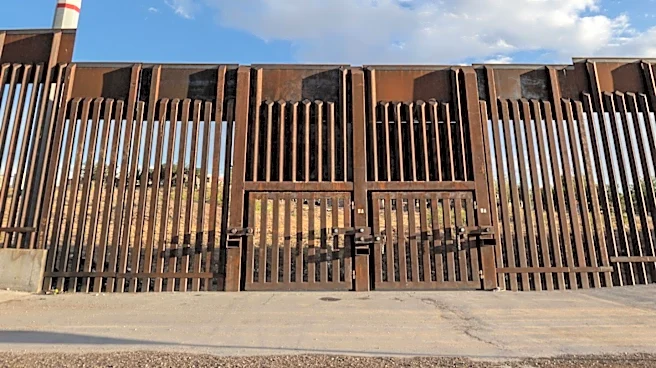
The Tohono O'odham Nation has issued a warning to federal contractors against entering its reservation to begin border wall construction. The tribe has posted 'No Trespassing' signs and placed tribal police
on alert to prevent unauthorized access. This action follows the tribe's lawsuit against the U.S. Department of Homeland Security, seeking to block the construction of the border wall on its land. The Tohono O'odham Nation, which spans 62 miles of the U.S.-Mexico border in Arizona, argues that existing measures have already significantly reduced illegal crossings, making a physical wall unnecessary. A federal court is currently considering the case.
Why It's Important?
The Tohono O'odham Nation's resistance to the border wall highlights the ongoing tensions between federal immigration policies and the rights of indigenous communities. The tribe's actions underscore the broader debate over the effectiveness and ethical implications of border wall construction. The outcome of this legal battle could set a precedent for other indigenous groups and impact future federal infrastructure projects on tribal lands. Additionally, the case raises questions about the balance between national security and the preservation of indigenous sovereignty and cultural heritage.
What's Next?
The federal court's decision on the Tohono O'odham Nation's lawsuit will be pivotal in determining the future of the border wall construction on tribal lands. If the court rules in favor of the tribe, it could halt the project and influence similar cases across the country. The tribe's leadership is likely to continue advocating for alternative border security measures that respect their sovereignty. The federal government may need to engage in negotiations with the tribe to find a mutually acceptable solution, potentially involving increased collaboration on border security without resorting to physical barriers.