




What's Happening?
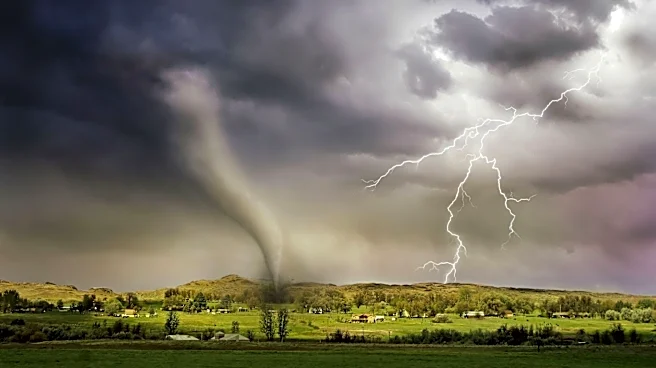
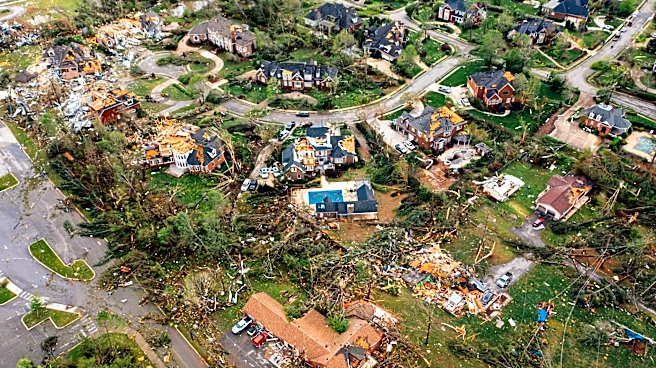
Cleanup operations and damage assessments are currently underway in Delaware's capital, Dover, and on Long Island, New York, following tornadoes that touched down during severe storms. These storms brought heavy rains and flash flooding to the Northeast,
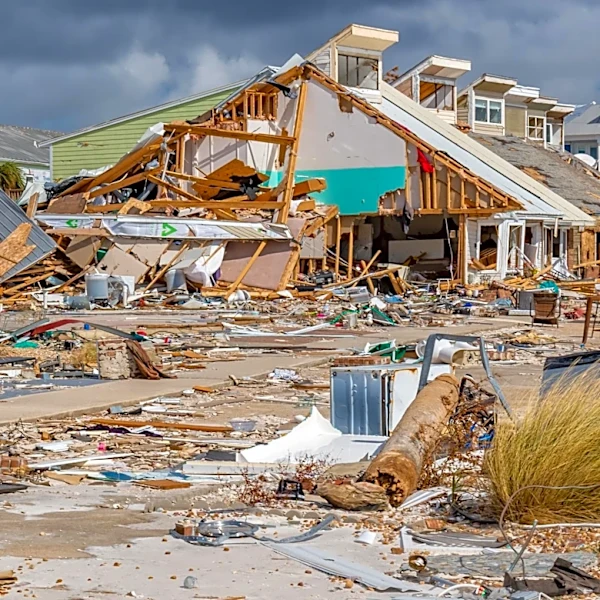
leaving numerous individuals stranded in their vehicles. While there have been no reports of serious injuries, the National Weather Service confirmed a tornado in Dover, with social media showing significant damage, including a motel roof being blown off along Route 13. On Long Island, a tornado, which began as a waterspout over the Atlantic Ocean, struck Atlantic Beach, tearing apart small buildings at a beach club. Weather service crews are investigating both sites to determine the strength and paths of the tornadoes. Dover Mayor Robin Christiansen lifted a state of emergency to facilitate cleanup, and Nassau County Executive Bruce Blakeman reported rescues of people trapped in flooded cars on Long Island.
Why It's Important?
The occurrence of tornadoes in densely populated areas like Long Island and the capital of Delaware highlights the increasing vulnerability of U.S. communities to extreme weather events. While tornadoes are more commonly associated with the Midwest, their impact on the Northeast underscores the need for enhanced preparedness and resilient infrastructure in regions not traditionally considered tornado-prone. The disruption caused, from property damage to stranded motorists, demonstrates the immediate economic and social costs of such events. For local governments, this necessitates a review of emergency response protocols, urban planning, and public awareness campaigns to mitigate future risks and ensure community safety. The lack of serious injuries, despite significant damage, points to effective early warning systems and community response, but also serves as a reminder of potential dangers.
What's Next?
In the immediate future, weather service crews will continue their assessments to officially classify the tornadoes, which will aid in understanding their characteristics and improving future forecasting. Local authorities in Dover and Nassau County will focus on debris removal, infrastructure repair, and restoring services to affected areas. Residents and businesses will begin the process of filing insurance claims and rebuilding. In the longer term, these events may prompt discussions at state and local levels regarding climate change adaptation strategies, including investments in more robust building codes, improved drainage systems, and advanced weather monitoring technologies. Public education campaigns on tornado safety and flash flood preparedness are also likely to be reinforced in the affected regions.
Beyond the Headlines
The tornadoes in Delaware and Long Island contribute to a broader national narrative of changing weather patterns and the increasing frequency of severe weather events across the U.S. This trend challenges historical assumptions about regional climate risks and necessitates a re-evaluation of national disaster preparedness strategies. Beyond the physical damage, such events can have lasting psychological impacts on communities, fostering anxiety about future weather occurrences. The reliance on social media for initial damage reports also highlights its dual role as both a rapid information dissemination tool and a potential source of unverified information during crises. Ultimately, these incidents serve as stark reminders of the interconnectedness of climate, infrastructure, and community resilience in the face of an evolving environment.