





What's Happening?
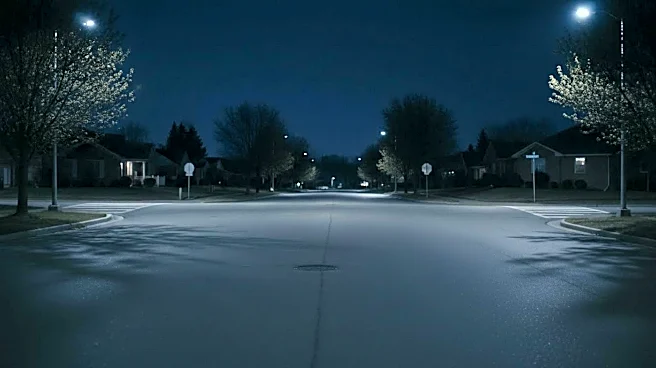
The Allen County Coroner's Office has announced that the cause of death for Donsia Lamont Kizer, a 49-year-old man killed in a hit-and-run crash in June, is 'undetermined.' Kizer died at the scene near the intersection of Maysville Road and Lake Forest
Drive in Fort Wayne, Indiana, shortly before midnight on June 18. This incident marked the 19th traffic-related fatality in Allen County for the year. Authorities believe a 2009-2014 Ford F150 pickup truck was involved in the collision and would likely have sustained front-end damage. The Fort Wayne Police Department is actively seeking information from the public to identify the vehicle and driver responsible. They have requested assistance in locating a possible suspect vehicle and have provided contact numbers for the police department and Crime Stoppers, as well as an option to submit anonymous tips through the P3 Tips app.
Why It's Important?
This case highlights the ongoing challenges faced by law enforcement in resolving hit-and-run incidents, which often leave victims' families without closure and perpetrators unpunished. The 'undetermined' cause of death, while a medical classification, underscores the complexities involved in reconstructing events from such crashes, especially when key evidence, like the responsible vehicle and driver, is missing. For the community, the unresolved nature of this fatality can erode public trust and a sense of safety on the roads. It also emphasizes the critical role of public cooperation in criminal investigations, as tips from citizens are often crucial in identifying suspects in hit-and-run cases. The high number of traffic fatalities in Allen County this year, with Kizer's death being the 19th, points to a broader issue of road safety that may require increased public awareness campaigns, stricter enforcement, or infrastructure improvements to prevent future tragedies.
What's Next?
The Fort Wayne Police Department will continue its investigation into the hit-and-run incident that resulted in Donsia Lamont Kizer's death. Their primary focus will remain on identifying the 2009-2014 Ford F150 believed to be involved and locating its driver. Law enforcement will likely follow up on any leads generated from public tips, potentially utilizing forensic evidence from the scene if available. The 'undetermined' cause of death may prompt further medical or accident reconstruction analysis if new evidence emerges. The police department's continued appeal to the public for information suggests that community involvement is crucial for the case to progress. Without new information, the investigation could remain stalled, leaving the case unresolved. The outcome of this investigation will not only bring potential justice for Kizer's family but could also influence local discussions on traffic safety and law enforcement strategies for hit-and-run cases.
Beyond the Headlines
The 'undetermined' cause of death in a hit-and-run case can have profound psychological and emotional impacts on the victim's family, extending beyond the immediate grief of loss. The lack of a definitive cause, coupled with the absence of accountability for the perpetrator, can hinder the healing process and leave lasting questions. Ethically, hit-and-run incidents raise concerns about civic responsibility and the moral obligation of drivers to remain at the scene of an accident. The prevalence of such incidents also points to potential societal issues, such as a lack of empathy or fear of legal consequences, that lead individuals to flee. From a legal perspective, the 'undetermined' classification might complicate potential civil lawsuits, as proving negligence or intent becomes more challenging without a clear understanding of the circumstances leading to death. This case serves as a stark reminder of the human cost of traffic violence and the broader societal implications when justice is delayed or denied in such tragic events.