







What's Happening?
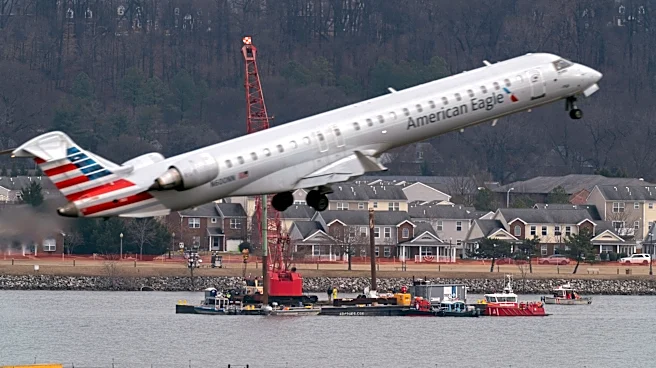
The U.S. House of Representatives has passed the Alert Act, an aviation safety bill prompted by last year's collision between a jet and an Army helicopter near Washington, D.C. The bill aims to implement locator systems for aircraft to prevent similar
incidents. While the bill has industry support, it faces criticism from victims' families and senators who believe it needs stricter timelines and provisions. The National Transportation Safety Board supports the revised bill, which mandates new technology systems for aircraft around busy airports.
Why It's Important?
The passage of the Alert Act is a significant step in improving aviation safety in the U.S., addressing systemic issues that led to the tragic collision. The bill's focus on locator systems could enhance pilot awareness and prevent future accidents. However, the debate over the bill's provisions highlights the complexities of balancing safety with operational needs, particularly for military flights. The legislation's progress reflects ongoing efforts to strengthen aviation regulations and protect passengers, with potential implications for industry standards and public confidence in air travel safety.
What's Next?
The bill now moves to the Senate, where further negotiations are expected to address concerns raised by victims' families and senators. The Senate's ROTOR Act, which failed in the House, may influence amendments to the Alert Act. Key stakeholders, including the National Transportation Safety Board and aviation industry groups, will continue to advocate for comprehensive safety measures. The outcome of these legislative efforts will determine the future of aviation safety protocols and the implementation of new technologies in the U.S. airspace.