






What's Happening?
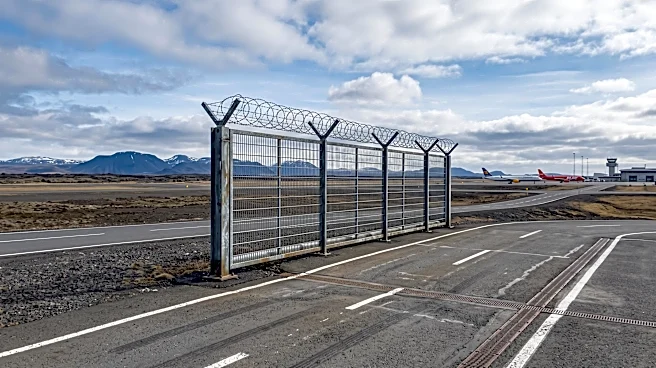
General Nick Perry, the new commander of NATO’s Joint Force Command Norfolk, made his inaugural official visit to Iceland on November 6. During his visit, General Perry engaged with Icelandic defense officials and toured the security area at Keflavík
Airport. The discussions primarily focused on Iceland's contributions to collective defense, the critical role of the North Atlantic and Arctic regions in security, and the existing NATO infrastructure in the country. General Perry is the first British officer to lead the Norfolk command, which holds the responsibility for safeguarding vital Atlantic lines of communication between North America and Europe. This visit follows a recent trip by NATO Secretary General Mark Rutte to Iceland, underscoring the alliance's renewed attention to the strategic importance of Keflavík.
Why It's Important?
This visit highlights the increasing strategic importance of the North Atlantic and Arctic regions for NATO and U.S. security interests. The discussions in Iceland underscore the alliance's commitment to maintaining robust surveillance and readiness capabilities in these critical areas, which are essential for transatlantic security and the projection of power. Iceland's geographical position makes it a crucial hub for monitoring maritime activities and ensuring the free flow of commerce and military assets. The focus on infrastructure and defense contributions indicates a concerted effort to strengthen NATO's northern flank, which is vital for deterring potential adversaries and responding to emerging threats in a rapidly changing geopolitical landscape. The U.S., as a leading member of NATO, benefits directly from enhanced collective defense capabilities in this region.
What's Next?
The visit by General Perry is likely to lead to continued collaboration between NATO, the U.S., and Iceland on defense initiatives in the North Atlantic and Arctic. Future steps may include further investments in surveillance and readiness infrastructure at key locations like Keflavík Airport. There could also be an increase in joint military exercises and deployments of maritime patrol aircraft to the region, similar to recent British deployments. These actions would aim to enhance interoperability among NATO forces and reinforce the alliance's presence. Continued high-level engagements between NATO commanders and Icelandic officials are anticipated to ensure ongoing coordination and adaptation to evolving security challenges in the high North.
Beyond the Headlines
The increased focus on the North Atlantic and Arctic extends beyond immediate military readiness, touching upon broader geopolitical shifts. As climate change opens new shipping routes and access to natural resources in the Arctic, the region is becoming a new arena for strategic competition. NATO's enhanced presence, supported by U.S. involvement, signals a proactive approach to securing these emerging frontiers. This also has implications for international law and governance in the Arctic, as nations assert their interests. The emphasis on collective defense in this region reflects a long-term strategy to maintain stability and deter potential challenges to the international order, ensuring that critical sea lanes remain open and secure for all allied nations.