






What's Happening?
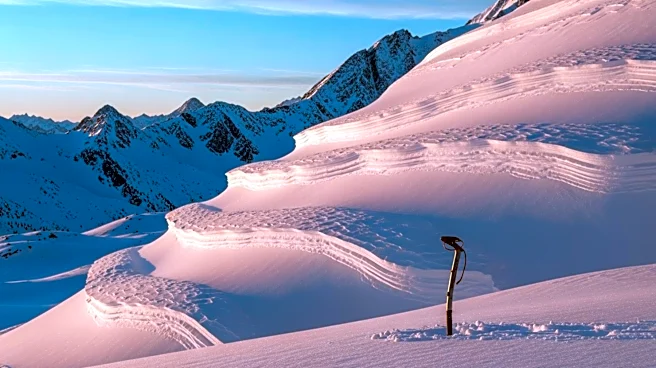
This winter season in the Alps has seen a significant increase in avalanche-related fatalities, with 146 deaths recorded since October. The rise in incidents is attributed to complex snowpack conditions, which began with early snowfall in November followed
by a prolonged drought. This led to the formation of 'persistent weak layers' in the snowpack, making it highly unstable. When heavy snowfall resumed in January, it created dense snow slabs resting on these weak layers, increasing the risk of avalanches. Despite warnings and daily avalanche bulletins, many skiers and snowboarders ventured into high-risk areas, often ignoring safety advice. The situation highlights the challenges in predicting and managing avalanche risks, even for experienced individuals like mountain guides and ski patrollers.
Why It's Important?
The surge in avalanche deaths underscores the critical need for improved public awareness and education on avalanche safety. As climate change contributes to more unpredictable weather patterns, including long dry spells followed by intense snowfall, the frequency of such dangerous conditions may increase. This poses a significant risk to the growing number of people engaging in winter sports and tourism in the Alps. The situation calls for enhanced safety measures, better dissemination of avalanche bulletins, and increased emphasis on the consequences of ignoring safety warnings. The economic impact on the tourism industry could be substantial if safety concerns deter visitors from the region.
What's Next?
Efforts to mitigate avalanche risks are likely to focus on improving public education and awareness. This includes promoting the use of safety gear, understanding terrain choices, and recognizing warning signs of unstable snowpacks. Authorities may also consider stricter regulations on accessing high-risk areas during dangerous conditions. The role of climate change in altering snowpack stability will continue to be a subject of research, potentially influencing future safety protocols and infrastructure investments in alpine regions.
Beyond the Headlines
The human factor plays a significant role in avalanche incidents, as frustration from long dry periods can lead to risky behavior when snow returns. Social media's influence on showcasing extreme sports may also contribute to this behavior. The increasing accessibility and popularity of winter sports mean that more people are exposed to these risks, necessitating a cultural shift towards prioritizing safety over thrill-seeking. Additionally, the economic implications for local communities reliant on winter tourism could drive further investment in safety and education initiatives.