



What's Happening?
The Federal Emergency Management Agency (FEMA) has been authorized by President Trump to provide emergency assistance to Washington, D.C., following a significant sewage spill into the Potomac River. The incident began on January 19, when a 72-inch pipeline,
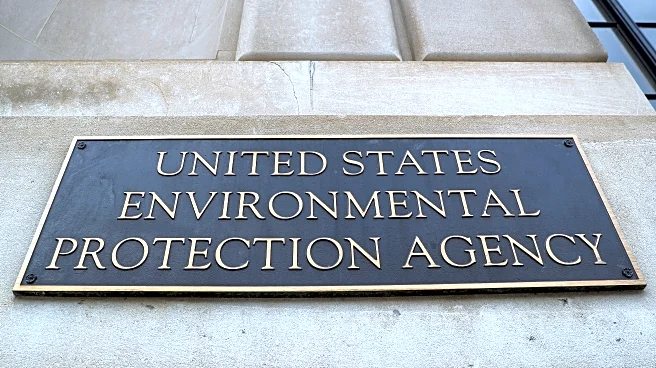
known as the Potomac Interceptor, ruptured, releasing approximately 250 million gallons of untreated sewage into the river. The Environmental Protection Agency (EPA) and DC Water have been actively involved in managing the situation, working to repair the pipeline and monitor the environmental impact. Despite the leak being largely under control, full repairs are expected to take several months. D.C. Mayor Muriel Bowser declared an emergency and requested federal assistance, which was granted after President Trump criticized local officials for their handling of the spill.
Why It's Important?
The involvement of FEMA and the federal government underscores the severity of the environmental impact caused by the sewage spill. The Potomac River is a critical waterway for the region, and the spill poses potential risks to public health and the environment. The federal response highlights the importance of inter-agency collaboration in addressing environmental disasters. The incident also brings attention to infrastructure vulnerabilities and the need for robust maintenance and emergency preparedness plans. The political dynamics, with President Trump criticizing local Democratic leaders, add a layer of complexity to the response efforts, potentially influencing future federal-state relations in disaster management.
What's Next?
Efforts to fully repair the pipeline and mitigate the environmental impact will continue, with the EPA and DC Water leading the charge. Monitoring of the river's water quality will be crucial to ensure public safety, especially for those using the river for recreational purposes. The incident may prompt a review of infrastructure maintenance practices and emergency response protocols to prevent similar occurrences in the future. Political leaders and environmental agencies may engage in discussions to improve coordination and resource allocation for environmental disaster responses.