



What's Happening?
Kansas State University (K-State) is developing innovative 3D-printed concrete blocks to construct severe weather shelters, specifically targeting manufactured home communities. This initiative addresses the critical lack of storm shelters in these areas,
where approximately 4% of Kansans reside. Reese Greenlee, an assistant professor of architecture at K-State, noted the oversight of manufactured housing by architects, leading to a scarcity of essential resources like storm shelters. Collaborating with Shelby Doyle of Iowa State University and researchers at Iowa State’s Computation and Construction Lab, Greenlee is exploring the efficacy and cost-efficiency of shelters made from unreinforced 3D-printed concrete blocks. Unlike traditional shelters that often use steel or reinforced concrete, Greenlee's design features coil-shaped blocks intended to deflect impact debris. The research is currently in the testing phase to determine if these structures can meet FEMA's standards for tornado shelters and prove to be a more affordable solution.
Why It's Important?
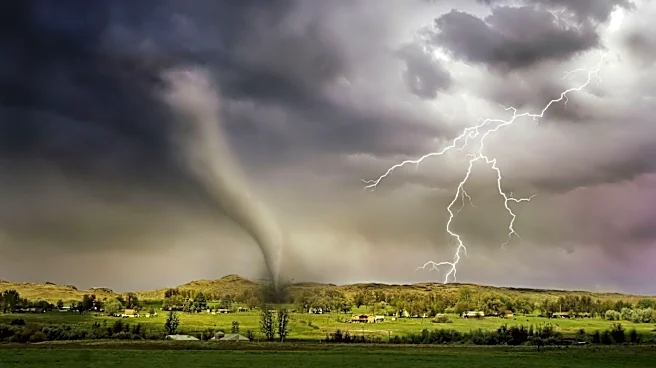
The development of 3D-printed storm shelters by Kansas State University holds significant importance for public safety and housing equity in the U.S. Manufactured home communities often lack adequate storm shelters, leaving residents highly vulnerable to severe weather events like tornadoes, which are common in Kansas. This vulnerability is exacerbated by the rising real estate prices, pushing more people towards affordable manufactured housing. The project aims to provide a cost-effective and accessible solution for these communities, which have historically been underserved in terms of infrastructure. By potentially reducing construction costs and waste, 3D printing technology could make storm shelters more feasible for widespread implementation. Furthermore, the research seeks to challenge the cultural stigmatization of manufactured housing by demonstrating that innovative architectural solutions can enhance safety and quality of life for its residents.
What's Next?
The next phase of this project involves rigorous testing of the 3D-printed concrete blocks to determine their ability to withstand tornado-force winds and meet Federal Emergency Management Agency (FEMA) impact load testing standards. Researchers will also assess the overall cost-efficiency of this construction method compared to traditional storm shelters. If successful, this technology could be scaled for modular manufacturing, allowing shelters to be produced off-site and deployed more rapidly. Beyond providing basic protection, Greenlee envisions these 3D-printed structures serving dual purposes, such as community or recreation centers, thereby integrating them more fully into the community infrastructure. Continued research and development are crucial to validate the potential of this technology and pave the way for its adoption in manufactured home communities across the U.S., ultimately enhancing safety and resilience.
Beyond the Headlines
This initiative by Kansas State University transcends the immediate goal of building storm shelters; it addresses deeper societal issues related to housing affordability, community resilience, and technological innovation. The stigmatization of manufactured housing has historically led to neglect in infrastructure development, creating disparities in safety and quality of life. By focusing on these communities, K-State's research highlights the potential of advanced manufacturing techniques, like 3D printing, to provide equitable solutions for underserved populations. The concept of multi-functional shelters—structures that serve as both protection during emergencies and community hubs during normal times—could foster stronger community bonds and reduce the 'bunker' perception of storm shelters. This approach could also influence future urban planning and architectural design, encouraging the integration of resilient and adaptable infrastructure in all housing types, thereby promoting a more inclusive and prepared society.