






What's Happening?
Atlantic City, New Jersey's World War I Memorial Monument, built in 1922 and dedicated in 1923, stands as a significant historical landmark. Originally conceived in 1907 as part of a city beautification plan, its purpose shifted to honor World War I veterans
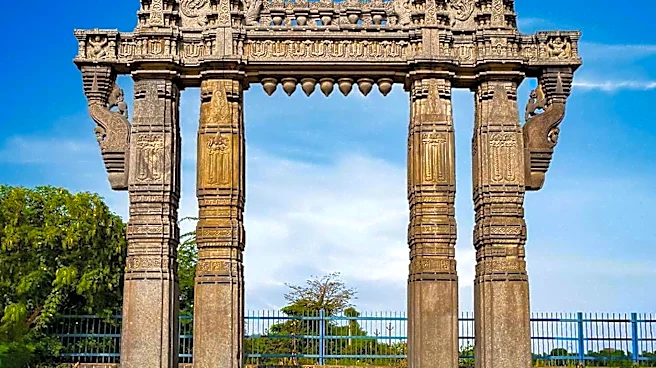
following America's entry into the conflict. The monument, officially placed on the National Register of Historic Places in 1981, features a nine-foot bronze sculpture titled 'Liberty in Distress' by French sculptor Frederick William MacMonnies, located inside the Greek Temple Monument at O’Donnell Park. A notable preservation effort led by former Atlantic City Mayor Jim Whelan involved moving the roadway itself instead of disassembling the monument, preventing potential damage to the aging structure.
Why It's Important?
This monument serves as a vital historical and cultural touchstone for Atlantic City and the nation, commemorating the sacrifices of World War I veterans. Its evolution from a beautification project to a war memorial reflects changing national priorities and the profound impact of global conflicts on local communities. The monument's inclusion in the National Register of Historic Places underscores its architectural and historical significance, ensuring its preservation for future generations. The innovative decision by former Mayor Jim Whelan to reroute a roadway to protect the monument highlights the community's dedication to preserving its heritage, demonstrating how local leadership can safeguard historical assets against modern development pressures. Such monuments play a crucial role in educating the public about past events and fostering a sense of civic pride and historical continuity.
What's Next?
The Atlantic City World War I Monument will continue to serve as a focal point for remembrance and historical education. Ongoing efforts, such as the recent lighting initiative championed by Atlantic City 5th Ward Councilwoman Maria Lacca, aim to enhance its visibility and appeal, ensuring it remains a prominent landmark. Future preservation efforts will likely focus on maintaining the monument's structural integrity and artistic elements, potentially involving restoration projects to address the effects of age and weather. The monument will continue to be a site for commemorative events, particularly on national holidays and anniversaries, reinforcing its role in honoring veterans and educating the public about the city's and nation's history. Its continued presence will inspire reflection on the sacrifices made during World War I and the importance of historical preservation.
Beyond the Headlines
The story of the Atlantic City World War I Monument delves into broader themes of historical memory, urban development, and civic identity. The monument's origins as a beautification project, later repurposed to honor veterans, illustrate how public spaces can adapt to reflect evolving societal values and historical events. The decision to move a roadway rather than dismantle the monument highlights the tension between progress and preservation, and the importance of creative solutions in urban planning. Furthermore, the monument's French-inspired sculpture by MacMonnies speaks to the international connections forged during wartime and the shared cultural heritage that can emerge from global conflicts. These historical landmarks are not just static objects; they are dynamic symbols that continue to shape community narratives and provide tangible links to the past, influencing how current and future generations understand their history and identity.