







What's Happening?
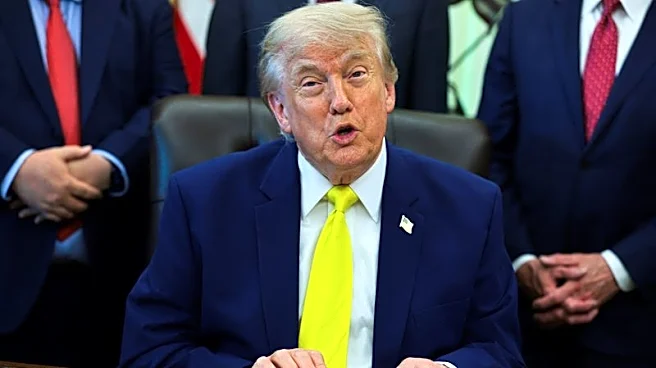
In a recent televised interview, President Donald Trump denied having promised 'no new wars' during his campaign, despite previous statements suggesting otherwise. This denial comes amidst heightened tensions involving the U.S., Israel, and Iran. Trump was
questioned about the potential for conflict with Iran and clarified that he did not guarantee the absence of war. BBC Verify has identified multiple instances where Trump campaigned on a platform of avoiding new military engagements. The President's current stance reflects the complexities of managing international relations and military commitments while adhering to campaign promises.
Why It's Important?
President Trump's denial of his campaign promise highlights the challenges political leaders face in balancing campaign rhetoric with the realities of governance. This situation underscores the potential disconnect between political promises and policy implementation, particularly in the realm of foreign affairs. The President's statements may influence public perception and voter trust, especially among those who supported his non-interventionist stance. Additionally, this development could impact U.S. foreign policy, as it raises questions about the administration's approach to conflict resolution and military engagement.
What's Next?
The President's comments may prompt further scrutiny from political opponents and media outlets, potentially leading to increased debate over U.S. foreign policy strategies. As tensions with Iran continue, the administration will need to navigate diplomatic channels carefully to avoid escalation. The outcome of these efforts could shape the President's legacy and influence future electoral prospects. Observers will be watching for any shifts in policy or rhetoric that align with or diverge from the President's previous campaign promises.