

What's Happening?
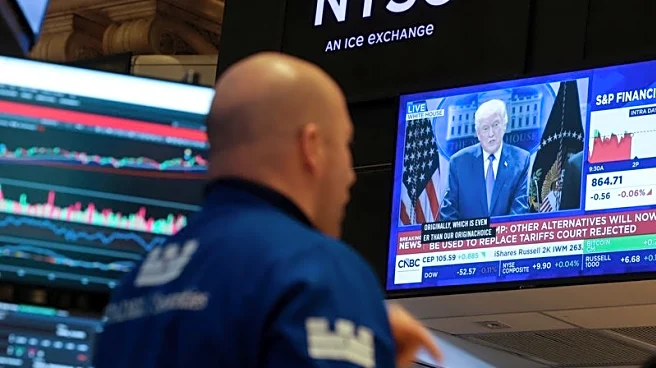
President Trump has announced an increase in global tariffs to 15%, following a U.S. Supreme Court ruling that deemed his previous use of the International Emergency Economic Powers Act (IEEPA) for tariff imposition as wrongful. This decision affects
various countries differently, with U.S. allies like the U.K., the European Union, and Singapore facing higher trade-weighted tariffs. In contrast, countries such as Brazil, China, and India will experience a reduction in levies. The European Union has expressed the need for clarity on the ruling, emphasizing that previous agreements capped tariffs at 15%. Asian countries, including Japan and South Korea, are also impacted, with Japan maintaining its investment commitments in the U.S. despite the tariff changes.
Why It's Important?
The tariff adjustments have significant implications for international trade relations and economic dynamics. U.S. allies that had previously negotiated trade deals may find themselves at a disadvantage, facing increased tariffs. Conversely, countries that resisted early agreements with the U.S., like Brazil, may benefit from reduced tariffs. This shift could alter trade balances and economic strategies, impacting industries reliant on international trade. The changes also highlight the complexities and potential volatility in global trade policies under the current administration, affecting stakeholders ranging from multinational corporations to small exporters.
What's Next?
Countries affected by the new tariffs are likely to seek further negotiations or clarifications with the U.S. to mitigate the impact on their economies. The European Union and other affected nations may push for discussions to ensure that previous trade agreements are honored. Meanwhile, countries benefiting from the tariff reductions might leverage this advantage to strengthen their trade positions. The situation remains fluid, with potential for further legal and diplomatic developments as stakeholders navigate the new trade landscape.
Beyond the Headlines
The tariff changes underscore the broader geopolitical tensions and economic strategies at play. The U.S. administration's approach to tariffs reflects a shift towards more protectionist policies, which could influence global trade norms and alliances. Additionally, the legal challenges and Supreme Court ruling highlight the ongoing debate over the executive branch's authority in trade matters. These developments may prompt other countries to reassess their trade policies and strategies in response to the evolving U.S. stance.