



What's Happening?
José Eliezer Martinez-Andino, a young Honduran man and former Raleigh resident, has returned to the United States after being deported last spring. Martinez-Andino, who holds Special Juvenile Immigrant Status (SIJS), was deported to Honduras in April
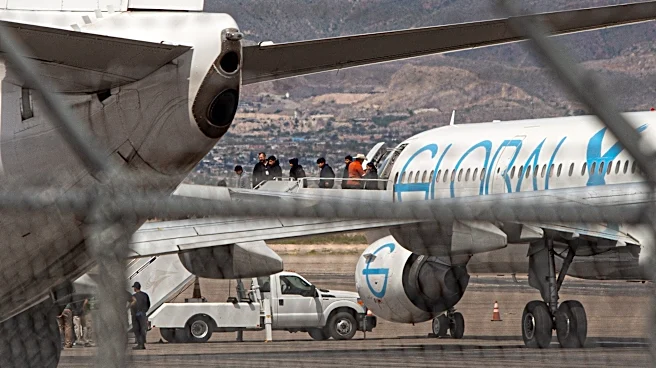
after being detained by immigration officials in Montana and Arizona. He was pressured to sign voluntary departure forms before being flown to his hometown of Tela in Honduras. Recently, he boarded a flight from San Pedro Sula, Honduras, to Harlingen, Texas, where he is currently detained. His attorney, Allison Chan, confirmed his return and expressed hope for his legal relief. Martinez-Andino, who crossed into the U.S. as an unaccompanied minor at 14, was granted SIJS and deferred action in 2023. A U.S. District Court judge ordered his return and restoration of his legal status in June.
Why It's Important?
The case of José Eliezer Martinez-Andino highlights the complexities and challenges within the U.S. immigration system, particularly for young immigrants with Special Juvenile Immigrant Status. His situation underscores the ongoing impact of immigration policies initiated under President Trump's administration, which have led to the deportation of many young individuals with SIJS. The legal battle for Martinez-Andino's return and status restoration reflects broader issues of immigration enforcement and the rights of young immigrants who have been neglected or abandoned. This case could influence future legal interpretations and enforcement of SIJS, affecting many young immigrants seeking protection and stability in the U.S.
What's Next?
Martinez-Andino's legal team is likely to continue advocating for his release and the restoration of his legal status. The outcome of his case could set a precedent for other young immigrants with SIJS facing similar challenges. Immigration advocates and legal experts will be closely monitoring the case, as it may prompt further discussions on immigration policy and the treatment of vulnerable immigrant populations. The Department of Homeland Security's response and any potential policy changes could significantly impact the future of SIJS holders in the U.S.