




What's Happening?
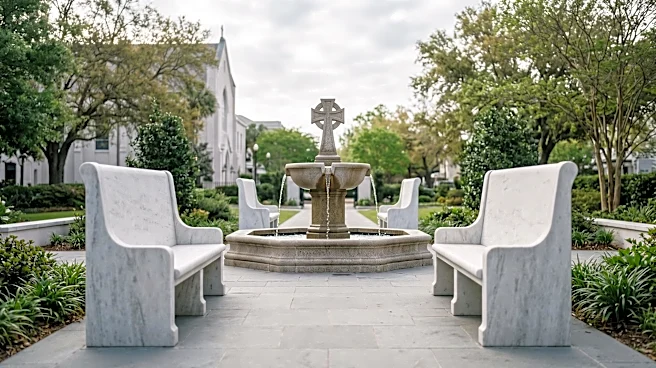
The Emanuel Nine Memorial has officially opened to the public in Charleston, South Carolina, following a decade-long building campaign and three years of construction. Located next to Mother Emanuel African Methodist Episcopal Church, the memorial features
two high-backed marble benches facing a fountain, with water flowing from a cross over the names of the nine individuals fatally shot in 2015. These individuals, including senior pastor and state senator Clementa Pinckney, were killed by a young white man during a Wednesday evening Bible study. The memorial aims to remember the victims and confront the sin of racism that led to the tragedy. Mother Emanuel’s current senior pastor, Eric S.C. Manning, expressed that the site offers a place of peace where hatred once manifested. Deona Smith, executive director of the Mother Emanuel Memorial Foundation, noted that visitors are encouraged to interpret and feel the memorial in their own way. The design, by architect Michael Arad, also includes a separate spot for individual introspection with a tall marble cross and a black granite basin.
Why It's Important?
The opening of the Emanuel Nine Memorial holds significant importance for the United States, particularly in addressing racial reconciliation and historical injustices. The memorial serves as a permanent reminder of the devastating impact of racial hatred and the resilience of the community. Charleston, known as the 'Holy City' with a deep racial history, including its role in the transatlantic slave trade, now has a prominent landmark dedicated to healing and remembrance. The memorial's focus on welcoming strangers, despite the tragic events that occurred when a stranger was welcomed, underscores a powerful message of inclusivity and understanding. This initiative can inspire other communities grappling with similar histories to create spaces for reflection and education, fostering dialogue about racism and its ongoing effects. The project, which raised $25 million for its first phase, demonstrates a collective commitment from various stakeholders, including state and local governments, businesses, and individuals, to honor the victims and promote a more just society.
What's Next?
Future plans for the Emanuel Nine Memorial include raising additional funds for the Survivors’ Garden, which will be located on the east side of the church. This garden will feature six stone benches, paying tribute to the five survivors of the 2015 shooting and the church itself. The foundation leaders' ultimate goal is to work towards eliminating racism and other forms of hatred. Pastor Manning anticipates that an established interracial group of clergy will be among the first participants in a memorial-related Crossroads Education & Outreach program. This program will focus on acknowledging racism, fostering reconciliation, inspiring forgiveness, and empowering inclusivity. These initiatives aim to extend the memorial's impact beyond a physical space, transforming it into an active center for education and community engagement, encouraging visitors to engage in dialogue and understanding to move forward as a community and a country.
Beyond the Headlines
The Emanuel Nine Memorial transcends its role as a mere monument, delving into deeper ethical and cultural implications for American society. The decision to create a welcoming space, even after a tragedy born from welcoming a stranger, highlights a profound commitment to human connection and forgiveness. Architect Michael Arad, who also designed the National September 11 Memorial, noted the challenging and emotionally charged process of its creation, indicating the complex layers of grief, resilience, and hope involved. The memorial's design, with its flowing water symbolizing baptism and benches offering shelter, invites personal interpretation and introspection, fostering individual and collective healing. The involvement of diverse individuals, including a White Catholic co-chair and an agnostic architect, in a project rooted in a Black church's tragedy, underscores the potential for cross-cultural collaboration in addressing societal wounds. This initiative represents a long-term shift towards confronting historical injustices and promoting a future where empathy and understanding prevail over hatred.