



What's Happening?
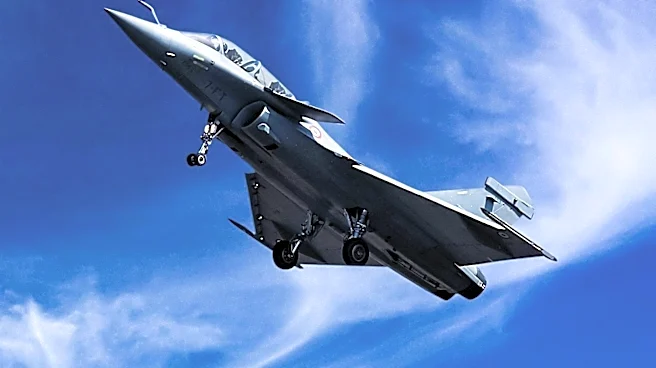
France is expanding its nuclear capabilities and evolving its deterrence strategy through concepts like 'adaptive deterrence' and 'forward nuclear deterrence.' The 'adaptive deterrence' approach focuses on tailoring responses to adversaries and maintaining
strategic uncertainty regarding France's military capabilities and potential actions during a crisis. This involves creating 'strategic dilemmas' for adversaries and controlling the disclosure of information about its nuclear assets. Concurrently, Paris is developing a 'forward nuclear deterrence' program with ten European countries, including Poland, Germany, and Finland. This initiative involves closer military cooperation, joint exercises, information exchanges, and the potential temporary deployment of French strategic forces on allied territory. Despite this cooperation, France maintains that the ultimate decision-making authority regarding the use of nuclear weapons will remain exclusively with the French President. The program is presented as a complement to NATO's deterrence, aiming to address growing European doubts about the credibility of American nuclear deterrence, particularly in the context of President Trump's policies.
Why It's Important?
France's evolving nuclear deterrence strategy has significant implications for European security and the broader NATO alliance. The 'adaptive deterrence' concept aims to enhance France's ability to deter potential adversaries by introducing uncertainty and flexibility into its response mechanisms. The 'forward nuclear deterrence' program, involving key European allies like Poland, seeks to strengthen collective security by integrating French nuclear capabilities more closely with allied defense planning. This initiative is particularly important for the U.S. as it addresses concerns among European partners regarding the reliability of American nuclear assurances, especially in a changing geopolitical landscape. While France emphasizes its independence in nuclear decision-making, this program can bolster European defense capabilities and provide an additional layer of deterrence on NATO's eastern flank. It also highlights a potential shift towards greater European self-reliance in defense, which could influence future transatlantic security arrangements and burden-sharing within NATO.
What's Next?
France will continue to invest in modernizing its nuclear arsenal, focusing on sea-based and air-based components. The 'forward nuclear deterrence' program will see ongoing military cooperation, joint exercises, and information exchanges with the ten participating European countries. Poland, having already entered an institutional phase of cooperation with France, will likely continue to press for more visible and durable military relations, including joint exercises, to solidify the extent of French deterrence. While France aims to complement NATO's deterrence, it will maintain its independent nuclear policy, with the French President retaining sole authority over nuclear weapon use. The program's effectiveness will depend on how well France can balance its independent nuclear posture with the expectations and security needs of its European partners, particularly concerning the geographical scope of its nuclear umbrella and the visibility of its deterrence efforts.