





What's Happening?
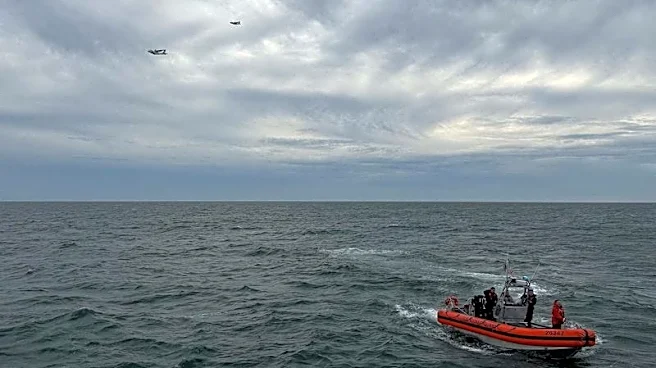
The U.S. Coast Guard has located debris from a medical transport aircraft off the coast of Nantucket, Massachusetts, and is actively searching for six people who were on board. The Federal Aviation Administration (FAA) initially reported losing contact
with a Gulfstream jet early Saturday, which was en route from Bermuda to Boston. The Coast Guard later confirmed that the discovered debris field is associated with the missing aircraft. Data from FlightAware indicates the plane, registered to Latitude Air Ambulance, departed Bermuda at 12:41 a.m. on Saturday and was flying at 24,000 feet before rapidly descending 13,000 feet in approximately two minutes, just prior to losing contact with air traffic controllers. An audio clip from Boston Logan International Airport captured an air traffic controller asking the pilot if they were 'coming in blind' and if they were declaring an emergency, to which no response was heard. Four Canadian nationals and two Bermudian nationals were on the plane.
Why It's Important?
This incident highlights the inherent risks associated with air medical transport, particularly over open water, and the critical role of rapid response and search and rescue operations by agencies like the U.S. Coast Guard. The sudden and significant altitude drop before contact was lost suggests a potentially catastrophic event, underscoring the importance of aviation safety protocols and emergency communication systems. The involvement of Canadian and Bermudian nationals also brings an international dimension to the search and recovery efforts, requiring coordination between multiple governments and agencies. For the U.S., the incident tests its maritime and aviation emergency response capabilities in a challenging offshore environment. The outcome of the investigation into the cause of the crash will be crucial for informing future aviation safety regulations and potentially impacting the operations of air ambulance services, which are vital for transporting critically ill or injured patients.
What's Next?
Search and rescue operations are continuing throughout the night near Nantucket, with the U.S. Coast Guard actively looking for the six individuals who were on board the missing medical aircraft. Canadian Minister of Transport Steven MacKinnon has stated that Canadian authorities are closely monitoring the situation and collaborating with relevant agencies. Bermuda Premier David Burt also confirmed that the Bermudian government is in contact with U.S. authorities and the families of the passengers. An investigation into the cause of the crash will commence once the immediate search and rescue phase concludes. This investigation will likely involve the FAA and other aviation safety bodies to determine the factors that led to the aircraft's disappearance and crash. The findings will be critical for preventing similar incidents in the future and may lead to reviews of flight procedures, aircraft maintenance, and emergency response protocols for medical transport flights.
Beyond the Headlines
The tragic loss of a medical transport aircraft and its occupants underscores the often-overlooked dangers faced by those involved in critical care air services. Beyond the immediate search and rescue, this event could prompt a broader examination of the regulatory oversight and safety standards for air ambulance operations, especially those involving international routes and challenging weather conditions. The incident also highlights the emotional toll on the families of those missing and the dedicated efforts of rescue personnel. Furthermore, it may reignite discussions about the technological advancements in aircraft tracking and emergency beacon systems, and whether current standards are sufficient to ensure rapid location and recovery in remote or maritime environments. The collaboration between the U.S., Canadian, and Bermudian governments in this crisis also exemplifies the interconnectedness of international aviation safety and emergency response networks.