






What's Happening?
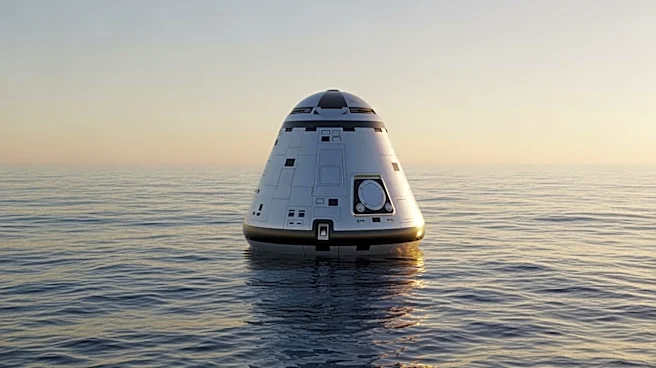
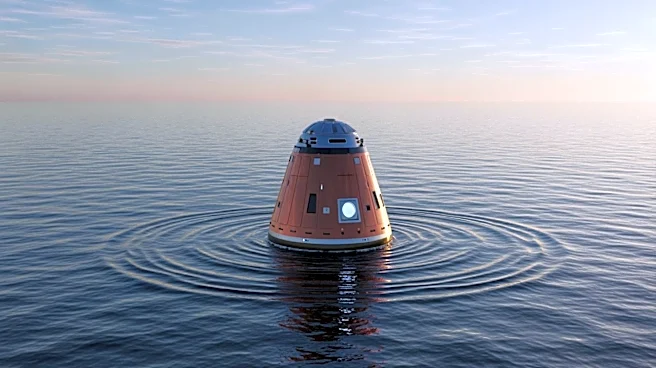
The USS Hornet, a significant vessel in the Apollo 11 mission, is the focus of an exhibit detailing its role in the recovery of astronauts after their historic moon landing. On July 24, 1969, the ship was positioned in the Pacific southwest of Hawaii,
awaiting the splashdown of the Apollo 11 capsule. During this critical moment, the Air Force instructed the ship to relocate approximately 240 miles due to an approaching thunderstorm. This directive was based on satellite data, which was classified at the time, preventing the Air Force from disclosing the source of their information. The exhibit aims to shed light on the logistical challenges and the technological advancements of the era that played a crucial role in the success of the Apollo 11 mission.
Why It's Important?
The exhibit serves as a reminder of the technological and strategic capabilities that were pivotal during the Apollo 11 mission, highlighting the importance of satellite technology in military and space operations. The maneuver executed by the USS Hornet underscores the significance of weather monitoring and the role of classified information in ensuring mission success. This historical account not only celebrates the achievements of the Apollo 11 mission but also educates the public on the complexities involved in space exploration and recovery operations. It reflects on the advancements in satellite technology and its impact on military and space missions, offering insights into the evolution of these technologies over the decades.
What's Next?
The exhibit is expected to attract visitors interested in space history and military operations, potentially sparking discussions on the advancements in satellite technology and its applications in modern-day missions. It may also inspire further educational programs and exhibits that delve into other aspects of the Apollo missions and the technological innovations that supported them. As public interest in space exploration continues to grow, such exhibits play a crucial role in fostering a deeper understanding of historical missions and their legacy.
Beyond the Headlines
The exhibit not only highlights the technological aspects of the Apollo 11 mission but also touches on the ethical considerations of using classified information for mission success. It prompts reflection on the balance between transparency and security in military operations, especially in the context of space exploration. Additionally, it offers a cultural perspective on the era, showcasing the collaborative efforts between different branches of the military and space agencies to achieve a common goal. This historical narrative contributes to the broader discourse on the role of technology in shaping human achievements and the ethical dimensions of its use.