





What's Happening?
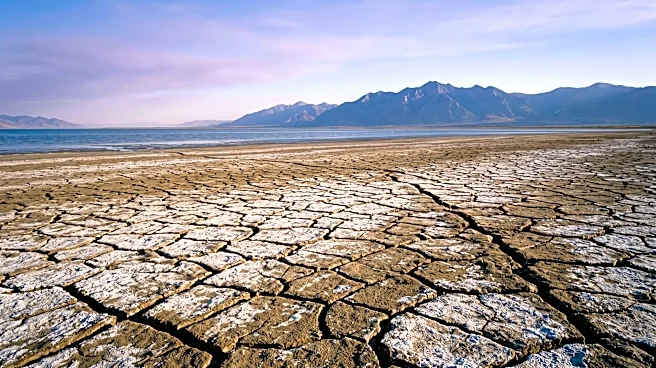
An environmental documentary titled “The Lake,” which premiered at the Sundance Film Festival, is currently being screened across Utah to raise awareness about the critical condition of the Great Salt Lake. The film includes footage from a roundtable
organized by Governor Spencer Cox, where researchers, advocates, and legislators discussed strategies and funding priorities for the lake's restoration. A state charter has set a goal to achieve healthy lake levels by 2034, coinciding with Salt Lake City's hosting of the Winter Olympics. The documentary addresses the public's perception that a record-breaking snowstorm in the winter of 2022-2023 resolved the issue, a sentiment referred to as 'prayers for rain.' Microbiologist Bonnie Baxter, ecologist Ben Abbott, and former Great Salt Lake commissioner Brian Steed are among those featured, highlighting the scientific and political challenges involved in conservation efforts. Kevin Perry, an atmospheric sciences professor, also discusses the increasing threat of arsenic in dust from the lakebed and the expansion of dust monitoring stations.
Why It's Important?
The Great Salt Lake's environmental crisis poses significant threats to Utah's ecosystem, public health, and economy. The lake's shrinking size leads to increased dust pollution, which can contain arsenic and other harmful substances, impacting air quality in the Salt Lake Valley and Wasatch Front. This public health concern affects residents' respiratory health and overall well-being. Economically, the lake supports a brine shrimp industry and contributes to the region's tourism. The film's focus on legislative and funding efforts, including the 2034 target for healthy lake levels, underscores the state's commitment to addressing this issue. The involvement of Governor Cox and other key officials highlights the political will to tackle the crisis, while the documentary's outreach aims to mobilize public support and engagement, which is crucial for the long-term success of conservation initiatives. The potential environmental catastrophe if the lake continues to shrink could have far-reaching consequences for the state's future.
What's Next?
The documentary's continued screenings across Utah, facilitated by organizations like Grow the Flow, aim to further educate the public and encourage involvement in conservation efforts. The goal is to maintain public pressure and engagement to ensure that the state's commitment to lake restoration, including the 2034 target, remains a priority. The expansion of dust monitoring stations, as mentioned by Professor Kevin Perry, indicates ongoing scientific efforts to assess and mitigate the health impacts of the shrinking lake. Future actions will likely involve continued legislative efforts to secure funding and implement water conservation policies. The film's optimistic tone, despite the dire circumstances, suggests that there is still a window of opportunity to save the lake if collective action is taken. The ongoing dialogue among researchers, advocates, and legislators, as depicted in the roundtable footage, will be crucial in shaping future strategies and ensuring accountability for the restoration goals.
Beyond the Headlines
The narrative surrounding the Great Salt Lake crisis extends beyond immediate environmental concerns to touch upon cultural and spiritual dimensions, as evidenced by the 'prayers for rain' sentiment discussed in the film. This highlights the intersection of faith, public perception, and scientific understanding in addressing environmental challenges. The film also implicitly raises questions about the balance between economic development and environmental preservation, particularly with the mention of Salt Lake City hosting the Winter Olympics in 2034, which could bring increased attention and resources but also potential developmental pressures. The involvement of Governor Cox in a roundtable discussion, despite his previous encouragement for prayer, suggests a pragmatic approach that integrates both spiritual and scientific solutions. The documentary's effort to counter the assumption that a single snowstorm resolved the issue underscores the need for sustained, evidence-based action rather than relying on short-term natural phenomena. This broader context emphasizes the complex interplay of human behavior, policy, and natural systems in environmental stewardship.