



What's Happening?
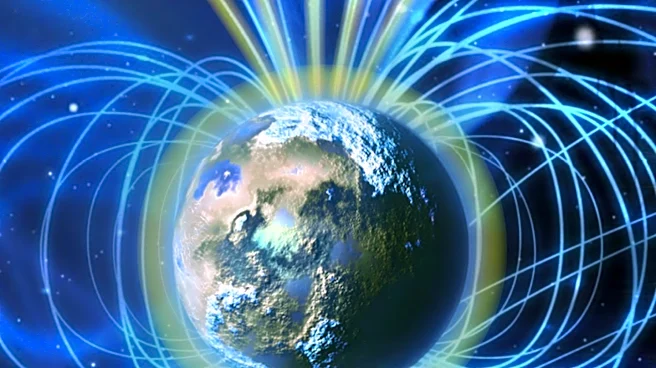
A new study suggests that primordial magnetic fields, potentially formed shortly after the Big Bang, could help explain the 'Hubble tension'—a significant discrepancy in measurements of the universe's expansion rate. Indirect calculations based on the cosmological
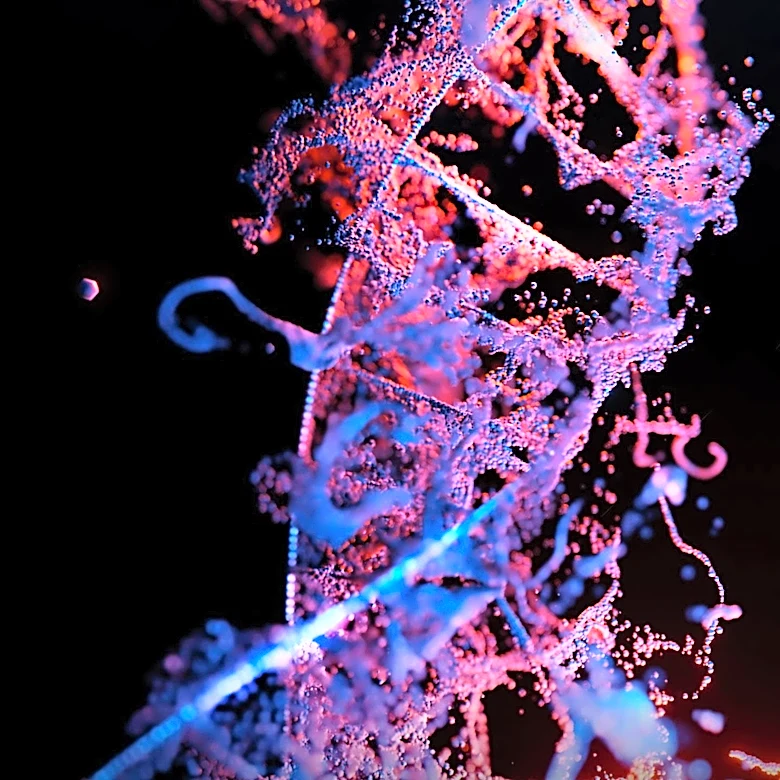
model and cosmic microwave background (CMB) data, including observations from the Planck telescope, estimate the Hubble constant at approximately 67 kilometers per second per megaparsec. However, direct measurements using Type Ia supernovae and Cepheids, conducted with the Hubble and James Webb telescopes, yield a higher value of about 73 kilometers per second per megaparsec. Researchers used full three-dimensional simulations of primordial plasma to test the hypothesis that weak magnetic fields in the early universe affected recombination, the period when electrons and protons formed neutral hydrogen. Their findings, reported by ScienceDaily, indicate that this possibility is consistent with existing CMB observations.
Why It's Important?
The Hubble tension is one of the most significant unresolved problems in modern cosmology. If both direct and indirect measurement methods are accurate, it implies a fundamental flaw or missing component in the standard cosmological model. Resolving this discrepancy is crucial for a complete understanding of the universe's evolution, age, and ultimate fate. The introduction of primordial magnetic fields as a potential factor offers a new avenue for investigation, suggesting that these fields could have influenced the early universe in ways not fully accounted for previously. By affecting the timing of the universe becoming transparent to light, these fields could alter the parameters inferred from CMB patterns, thereby easing the tension. This research could lead to a revision of cosmological models and a deeper understanding of the fundamental forces at play in the early universe.
What's Next?
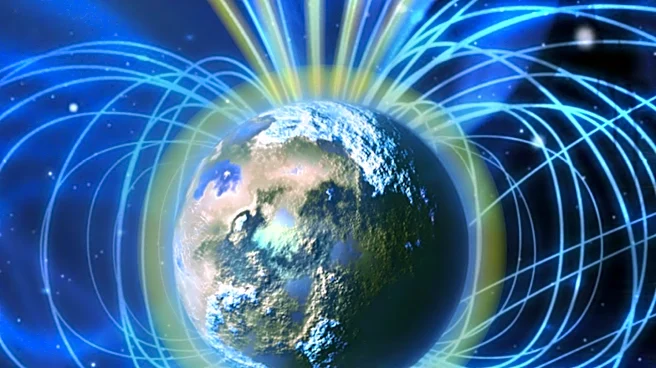
The study found a weak preference for the model incorporating primordial magnetic fields, at a level of approximately 1.5 to three standard deviations. While this is not yet considered a definitive discovery, scientists view it as a meaningful indication of the existence of such fields. Future research will likely focus on strengthening this evidence through more precise measurements and refined simulations. The data currently favors a magnetic field strength of about 5–10 picogauss in the present-day universe, suggesting that these primordial fields could be the origin of magnetic fields observed in galaxies and galaxy clusters. Further investigation will be needed to confirm the existence and precise strength of these fields and to fully integrate their effects into the standard cosmological model to definitively resolve the Hubble tension.
Beyond the Headlines
The concept of primordial magnetic fields touches upon the very fabric of the early universe and the conditions that led to the formation of cosmic structures. These fields, if confirmed, would represent a previously unacknowledged component of the universe's initial state, potentially influencing everything from the distribution of matter to the formation of the first stars and galaxies. The Hubble tension itself highlights the limits of our current cosmological understanding and the need for innovative theoretical and observational approaches. This research exemplifies how seemingly small, early-universe phenomena can have profound and measurable impacts on the universe's large-scale properties, pushing the boundaries of our knowledge and inspiring new questions about the fundamental nature of reality.