
What's Happening?
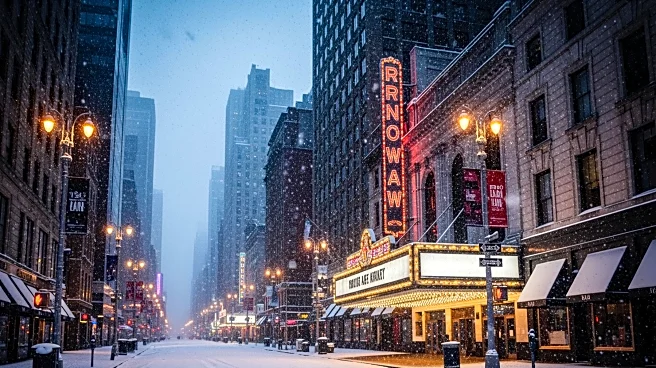
Broadway has announced the cancellation of most evening performances on February 22 due to an impending blizzard in New York City. The National Weather Service has issued a Blizzard Warning, predicting snowfall between 16 and 24 inches, with rates of up
to two inches per hour, accompanied by strong winds and whiteout conditions. This decision affects several major productions, including 'Oh, Mary!', 'Stranger Things: The First Shadow', 'The Lion King', 'Aladdin', 'Chicago', 'Book of Mormon', and '& Juliet'. However, matinee performances scheduled for 3 p.m. ET or earlier will proceed as planned. The cancellation follows a state of emergency declaration by New York State Governor Kathy Hochul, and travel bans in nearby counties are expected to further impact attendance. The Broadway League, representing producers and theater owners, made the decision to cancel, a rare move that could result in significant financial losses.
Why It's Important?
The cancellation of Broadway shows due to severe weather highlights the vulnerability of live entertainment to natural disruptions. This decision underscores the safety concerns for both performers and audiences, as commuting in hazardous conditions poses significant risks. Financially, the industry faces substantial losses, as each canceled show can result in hundreds of thousands of dollars in lost revenue. The move also reflects a shift in priorities, emphasizing safety over profit, which could influence future decisions in similar situations. The impact extends beyond Broadway, affecting local businesses reliant on theatergoers, such as restaurants and hotels, thereby influencing the broader economic landscape of New York City.
What's Next?
As the blizzard progresses, further cancellations or adjustments to scheduled performances may occur, depending on weather developments and safety assessments. The Broadway League and individual productions will likely monitor conditions closely to determine when it is safe to resume normal operations. Stakeholders, including theater owners, producers, and city officials, may engage in discussions to improve response strategies for future weather-related disruptions. Additionally, the financial implications of the cancellations may prompt discussions on insurance and contingency planning within the industry.