



What's Happening?
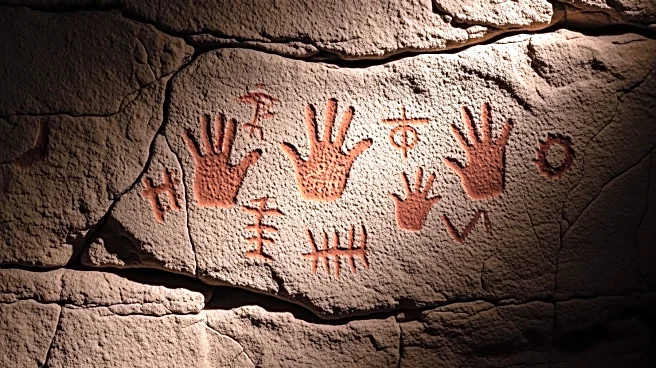
Researchers have discovered the world's oldest securely dated cave art on the Indonesian island of Sulawesi. The art, a hand stencil, dates back at least 67,800 years, challenging previous assumptions about the origins of human symbolic culture. The discovery
was made in limestone caves in southeastern Sulawesi, an area known for some of the earliest rock art. Using advanced dating techniques, scientists determined the age of the art by analyzing calcium carbonate deposits. This finding suggests that symbolic human culture may have emerged in Southeast Asia, rather than Europe, as traditionally believed.
Why It's Important?
This discovery has significant implications for understanding the development of human symbolic culture and migration patterns. The age of the Sulawesi cave art suggests that early humans in Southeast Asia were engaging in symbolic expression much earlier than previously thought. This challenges the Eurocentric view of cultural development and highlights the complexity of human history. The findings also provide evidence for early human migration routes into Sahul, the ancient landmass connecting Australia, Tasmania, and New Guinea. This research contributes to a broader understanding of how early humans spread across the globe and developed complex cultural practices.