
What's Happening?
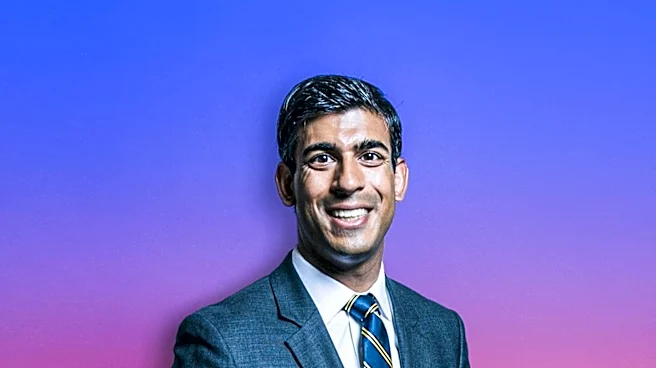
Rishi Sunak, the former Prime Minister, has stated he will not immediately return to frontline politics. Instead, he is focusing on teaching and consulting roles. He has taken up positions at Oxford University's
Blavatnik School of Government and the Hoover Institution at Stanford University. Sunak, born in Southampton, England, to Indian parents, served as Chancellor of the Exchequer during the COVID-19 pandemic, where he introduced the Coronavirus Job Retention Scheme, also known as furlough. This scheme, which paid up to 80 percent of employees' wages during lockdowns, was credited with preventing mass unemployment and significantly raised his public profile. His parents, who emigrated from East Africa, were a general practitioner and a pharmacist. Sunak's academic background includes Oxford University and an MBA from Stanford University, where he met his wife, Akshata Murty. His political career saw him become the first British Asian and Hindu Prime Minister.
Why It's Important?
Sunak's decision to step away from immediate frontline politics and engage with prominent academic institutions like Stanford's Hoover Institution has several implications. For U.S. academic and policy circles, his involvement brings a high-profile international perspective on economic policy, governance, and potentially artificial intelligence regulation, an area he prioritized during his premiership. His experience as a former head of government and finance minister offers valuable insights into global economic challenges and policy responses, which can enrich discussions and research at these institutions. His focus on teaching and consulting could influence future generations of policymakers and business leaders, potentially shaping approaches to global issues. Furthermore, his move highlights a growing trend of former political leaders transitioning into academic and advisory roles, leveraging their experience to contribute to public discourse and policy development outside of direct political office.
What's Next?
Sunak's immediate future involves his roles at Oxford University and the Hoover Institution, where he will be teaching and consulting. While he has ruled out an immediate return to frontline politics, the possibility of a future leadership bid remains an open question, though the scale of the Conservative defeat in 2024 and his unpopularity at the time of his departure suggest a challenging path back to direct political leadership. His post-political career has also included lucrative advisory roles with Goldman Sachs, Microsoft, and the AI startup Anthropic, with earnings often donated to charity. He also contributes a weekly column to The Sunday Times. These engagements indicate a continued involvement in public life, albeit through different avenues, focusing on areas like finance, technology, and policy analysis. His activities will likely continue to influence discussions on global economic and technological trends.
Beyond the Headlines
Sunak's transition from a high-stakes political career to academic and advisory roles underscores a broader shift in how former world leaders contribute to society. This move allows him to engage with complex global issues, such as AI regulation and economic policy, from a more detached, analytical perspective, potentially fostering more nuanced and long-term solutions free from immediate political pressures. His substantial personal wealth, largely derived from his wife's stake in Infosys, also provides him with significant independence in choosing his post-political endeavors. This financial autonomy allows him to pursue roles that align with his intellectual interests and public service aspirations without the financial constraints that might influence others. His engagement with U.S. institutions like Stanford further highlights the interconnectedness of global policy discussions and the flow of intellectual capital across borders, particularly in areas of emerging technology and economic governance.