



What's Happening?
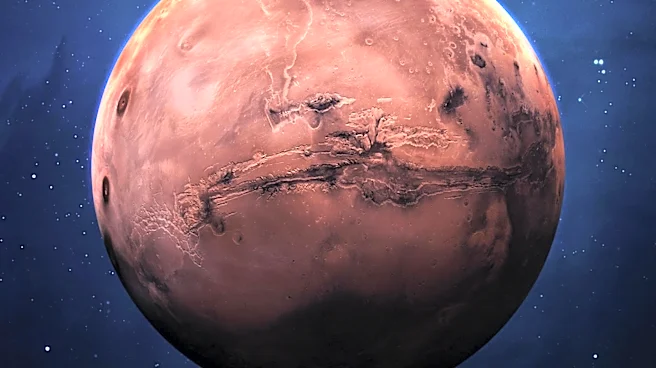
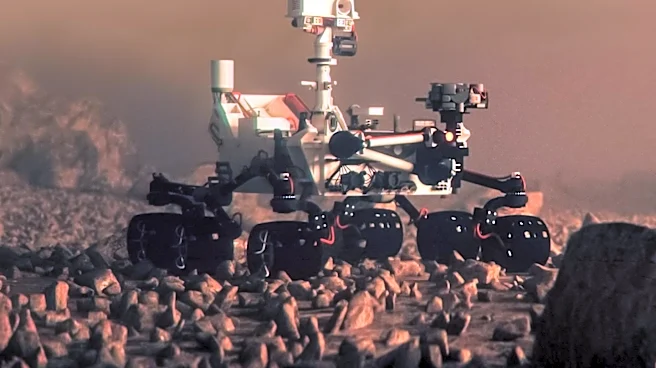
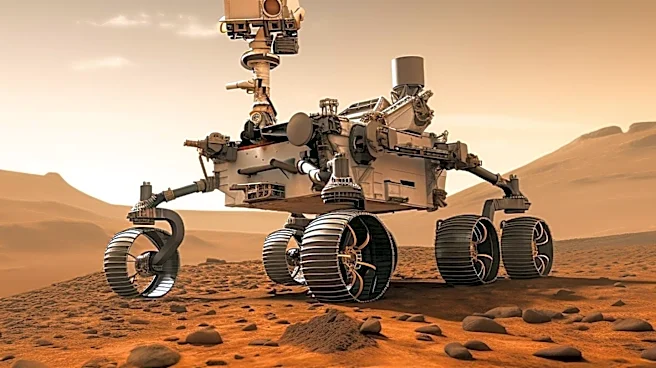
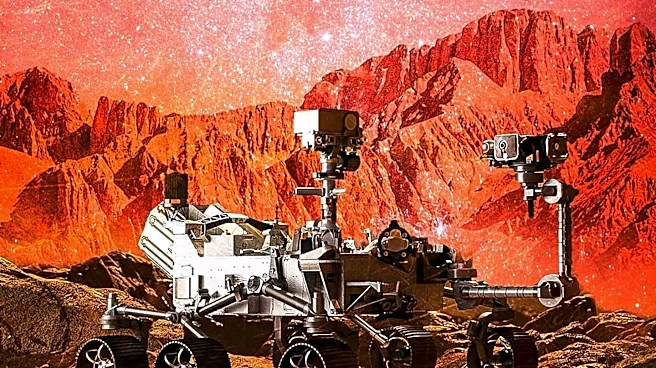
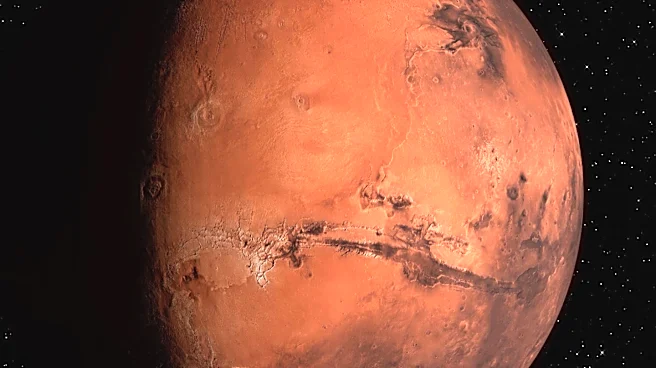
Researchers led by Jiacheng Liu at the University of Hong Kong have discovered evidence suggesting that liquid water may have existed on Mars more recently than previously thought. Using data from China's Zhurong rover, which landed in Utopia Planitia
in 2021, the team identified mineral crystals that could only have formed in standing water. These findings challenge the long-held belief that Mars' surface has been frozen for billions of years. The study, published in Nature Astronomy, indicates that the mineral selenite, a form of gypsum, was found in shapes that suggest formation in concentrated salty water. The researchers estimate that the water layer could have been between 20.5 and 82 feet deep, potentially formed by underground brine pushed to the surface by volcanic activity.
Why It's Important?
This discovery has significant implications for our understanding of Mars' geological history and its potential to support life. The presence of liquid water is a key factor in the search for past life on Mars, and these findings suggest that habitable conditions may have persisted much later than previously believed. This could influence future Mars exploration missions, as areas with evidence of recent water activity become prime targets for investigation. The study also provides insights into the planet's climate history and geological processes, which are crucial for understanding Mars' evolution and its potential for future human exploration.
What's Next?
Future Mars missions may focus on Utopia Planitia to further investigate the presence of water and its implications for past life. Rovers equipped with advanced instruments could analyze the mineral compositions and structures in greater detail, potentially uncovering more about Mars' hydrological history. Additionally, the study's findings may prompt a reevaluation of other Martian regions for signs of recent water activity. As researchers continue to analyze data from current and future missions, our understanding of Mars' potential to support life will continue to evolve.