



What's Happening?
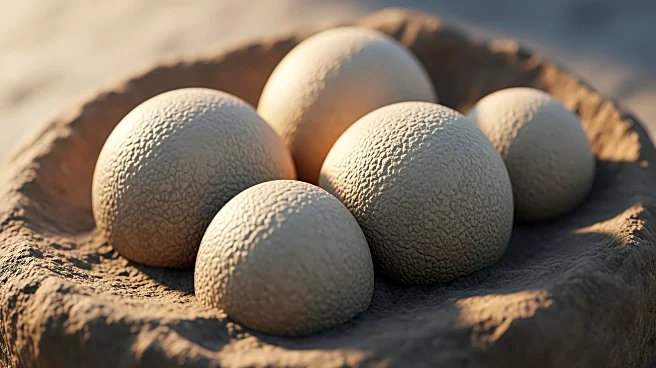
Researchers have discovered the largest known Mesozoic crocodyliform egg clutch in the Bauru Group of Brazil, containing 47 eggs. This discovery, published in the Journal of Vertebrate Paleontology, provides new insights into the reproductive strategies
of ancient crocodyliforms. The eggs, found in a fossiliferous outcrop first identified in 2004, were excavated between 2021 and 2023. The analysis revealed that the eggs were likely laid by notosuchian crocodyliforms, adapted to humid environments. The site suggests complex reproductive behaviors, including colonial nesting, and offers a glimpse into the diverse ecosystem of the Late Cretaceous period.
Why It's Important?
The discovery of such a large egg clutch expands the understanding of reproductive diversity among Mesozoic crocodyliforms. It suggests that these ancient reptiles had complex nesting behaviors similar to modern species, which could include communal nesting and parental care. This finding contributes to the broader knowledge of the evolutionary history of crocodyliforms and their ecological adaptations. The research also highlights the potential for further discoveries in the Bauru Group, which could provide additional insights into the biodiversity and environmental conditions of the Late Cretaceous period.
What's Next?
Future studies will focus on analyzing other fossil clutches from the same site, including those attributed to theropod dinosaurs and birds. These studies aim to correlate the findings with the geological context to better understand the interactions among different species at the nesting site. Continued research in the Bauru Group may uncover more about the reproductive strategies and ecological dynamics of ancient reptiles, offering a more comprehensive picture of the Mesozoic era.