







What's Happening?
A deputy in Macon County, North Carolina, has been fired and is now under investigation by the State Bureau of Investigation (SBI) for alleged misuse of Flock Safety equipment. The Macon County Sheriff’s Office announced the termination of Deputy Jonathan
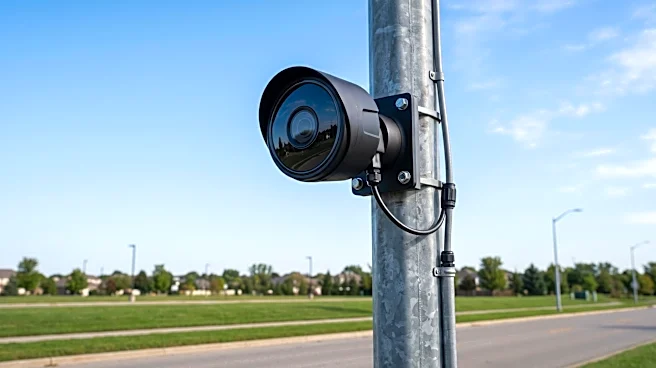
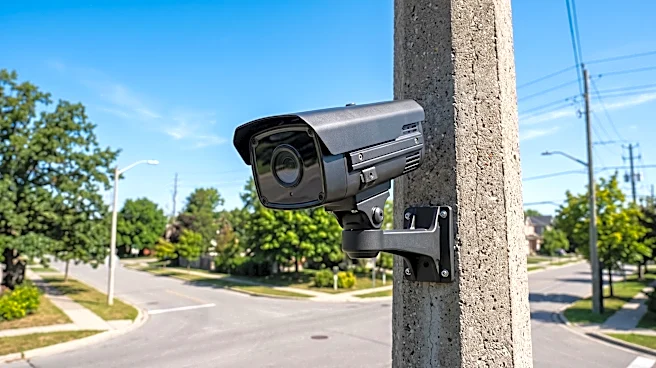
Bean, who had been with the office since 2016, following an internal affairs investigation. This development comes three months after Macon County commissioners voted unanimously to terminate their contract with Flock Safety in July. Sheriff Brent Holbrooks stated in an October 20 press release that his office received an alert from a credible outside agency regarding the deputy's abuse of the software, leading to Bean's administrative leave and subsequent firing. Flock Safety cameras, which are automated license plate readers (ALPRs), capture images of license plates and use artificial intelligence to catalog vehicle characteristics. While Macon County no longer operates these cameras, other North Carolina counties, such as Mecklenburg, maintain agreements allowing them to access Flock systems used by other law enforcement agencies.
Why It's Important?
The firing and subsequent SBI investigation highlight growing concerns surrounding the use and potential misuse of automated license plate reader technology by law enforcement in North Carolina and nationally. This incident underscores the challenges in balancing public safety needs with individual privacy rights, particularly regarding data collection and retention. The previous decision by Macon County commissioners to end their contract with Flock Safety, despite the Sheriff's insistence on its utility, reflects a broader public and governmental skepticism about the technology. The SBI's involvement signals the seriousness of the alleged misuse and could lead to legal precedents or stricter regulations on ALPR deployment and oversight. For law enforcement agencies, this event emphasizes the critical need for clear policies, robust training, and stringent auditing mechanisms to prevent abuse and maintain public trust. The incident also brings to light the difficulties in monitoring and ensuring ethical use of such powerful surveillance tools, especially when data can be shared across multiple jurisdictions.
What's Next?
The North Carolina State Bureau of Investigation will continue its probe into Deputy Jonathan Bean's alleged misuse of Flock Safety equipment. The outcome of this investigation could result in criminal charges against Bean, similar to recent cases in Brunswick County where a deputy was indicted for misusing ALPRs. The Macon County Sheriff’s Office has not yet provided the Flock audit logs requested by Carolina Public Press, which could offer more details on the extent of the alleged misuse. This incident may prompt further discussions and actions at the state level regarding the regulation of ALPR technology. While the SBI has issued best practices for law enforcement on ALPR use, these are currently guidelines and not legally binding. The ongoing scrutiny could lead to the enactment of more definitive laws concerning data retention, access protocols, and accountability measures for agencies utilizing these systems. Additionally, the case may influence other counties in North Carolina to re-evaluate their contracts and policies regarding ALPR technology.
Beyond the Headlines
This incident delves into the complex ethical and legal implications of surveillance technology in modern policing. The debate over ALPRs often centers on the Fourth Amendment, with critics arguing that continuous license plate scanning constitutes an unreasonable search. The ability of Flock's network to track vehicle location history across numerous cameras nationwide raises significant privacy concerns, as it can create detailed movement patterns of individuals without their knowledge or consent. The lack of transparency in how this data is used and audited, particularly when plate data is confidential under North Carolina law, makes it challenging for the public and oversight bodies to detect misuse. This case could fuel calls for greater transparency, independent oversight, and stronger legislative frameworks to protect civil liberties while still allowing law enforcement to leverage technology for legitimate crime-fighting purposes. The broader societal impact involves a potential erosion of trust between communities and law enforcement if such technologies are perceived as tools for indiscriminate surveillance rather than targeted investigations.