



What's Happening?
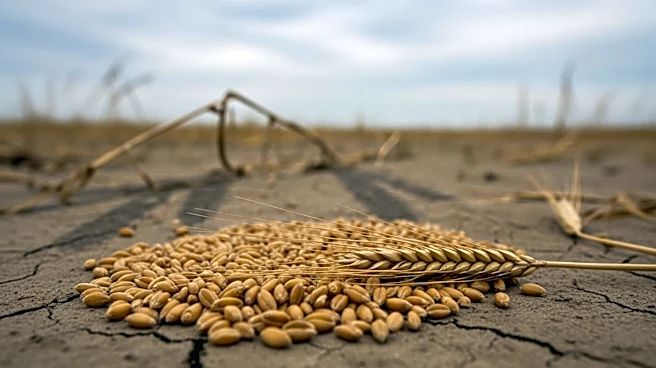
The Food and Agriculture Organization (FAO) of the United Nations has forecasted a 2% decline in global cereal production for the 2026/27 season. This anticipated drop is primarily attributed to lower wheat harvests in major producing countries, exacerbated
by adverse weather conditions. In the United States, winter wheat crop conditions are reported to be among the least favorable in decades, contributing to a tightening global supply outlook. Additionally, rising fuel and fertilizer costs are adding pressure on cereal markets. Despite the expected production decline, global cereal utilization is projected to increase by 0.6%, driven by continued demand for food, feed, and industrial uses. Consequently, world cereal stocks are expected to contract slightly by 0.3%, with a notable decrease in rice inventories.
Why It's Important?
The projected decline in cereal production is significant as it highlights vulnerabilities in global food security, particularly in the face of weather disruptions and rising agricultural input costs. The United States, as a major wheat producer, plays a crucial role in the global cereal market, and unfavorable crop conditions could lead to increased prices and tighter supplies. This situation may impact food prices globally, affecting both consumers and producers. The rising costs of fuel and fertilizers further complicate the agricultural landscape, potentially leading to higher production costs and reduced profitability for farmers. The FAO's forecast underscores the need for strategic planning and adaptation in agricultural practices to mitigate the effects of climate change and economic pressures.
What's Next?
As global cereal production faces challenges, stakeholders in the agricultural sector may need to explore alternative strategies to ensure food security. This could involve investing in climate-resilient crops, improving supply chain efficiencies, and enhancing international cooperation to stabilize food markets. Policymakers might also consider measures to support farmers in managing rising input costs and adapting to changing environmental conditions. Additionally, monitoring and addressing geopolitical tensions that could disrupt major trade routes will be crucial to maintaining stable food supplies and prices.
Beyond the Headlines
The FAO's forecast not only highlights immediate concerns over cereal production but also points to broader implications for global food systems. The interplay between climate change, economic factors, and agricultural practices could lead to long-term shifts in how food is produced and distributed. This situation may prompt increased investment in sustainable agriculture and innovation to enhance resilience against future disruptions. Furthermore, the potential impact on food prices could exacerbate existing inequalities, making it essential to address food access and affordability for vulnerable populations.