



What's Happening?
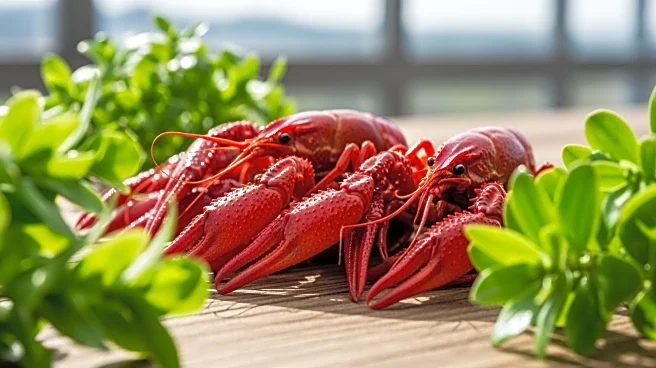
In Beijing, the introduction of innovative aquaculture technology has allowed for the year-round availability of crayfish, a dish traditionally enjoyed only in the summer. This development is attributed to advancements in Qianjiang, Hubei province, where
crayfish are now co-cultivated with rice in winter rice paddies. This method has overcome previous technical challenges associated with low temperatures, enabling a steady supply of fresh crayfish even during the winter months. As a result, Beijing's restaurants, particularly in areas like Sanlitun and Guijie Street, are now able to offer this popular dish throughout the year. The shift from seasonal to year-round production is seen as a significant leap for the industry, with the Qianjiang Crayfish Industry Promotion Center estimating a 30% increase in winter crayfish output this year.
Why It's Important?
The ability to supply crayfish year-round has significant implications for both the agricultural and culinary sectors in China. For farmers, this innovation means increased profitability, as they can now earn additional income from winter crayfish production. The consistent supply of high-quality crayfish also revitalizes Beijing's dining scene, providing restaurants with reliable ingredients during the colder months. This development not only enhances the culinary offerings in the capital but also supports the local economy by boosting the agricultural sector. The success of this model could encourage further innovations in aquaculture and other agricultural practices, potentially leading to similar advancements in different regions and industries.
What's Next?
As the year-round crayfish supply model proves successful, it is likely that other regions in China may adopt similar aquaculture techniques to enhance their agricultural output. This could lead to increased competition and innovation within the industry, potentially driving down costs and making crayfish more accessible to a broader market. Additionally, the success of this model may inspire further research and development in sustainable agricultural practices, contributing to food security and economic stability. Stakeholders, including government agencies and agricultural organizations, may also explore opportunities to export this technology and expertise to other countries facing similar challenges.