


What's Happening?
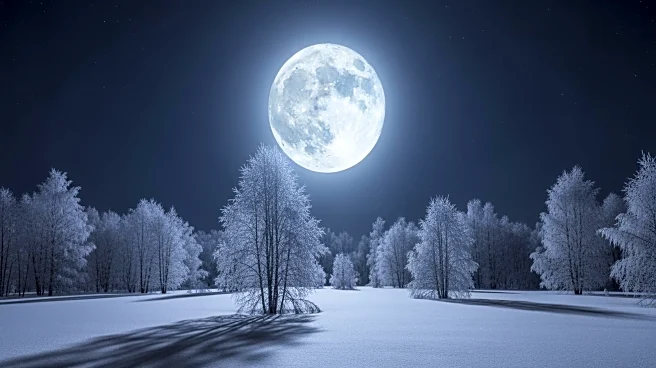
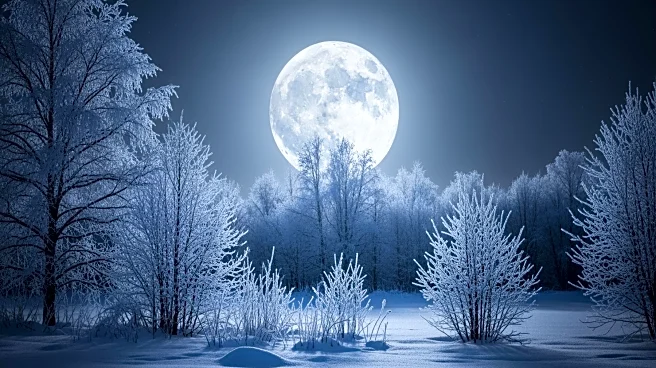
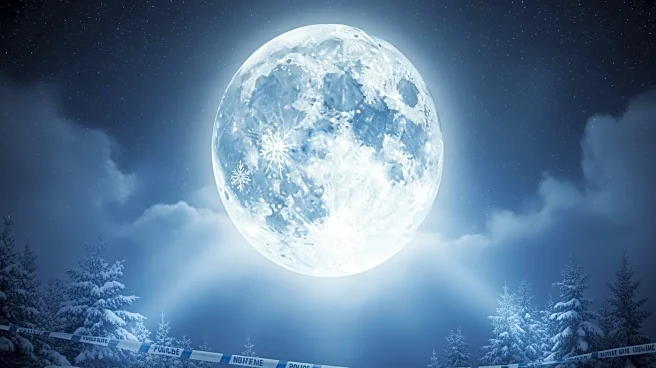
February's full moon, known as the 'Snow Moon', will reach peak illumination on February 1, 2026. Weather forecasts for Ohio predict partly cloudy skies and cold temperatures during the event. The Snow Moon is named for the heavy snowfall typical of February,
and Ohio offers several designated dark sky locations for optimal viewing, including Geauga Observatory Park and Fry Family Park. The moon will rise over Ohio, accompanying snowfall left from Winter Storm Fern. The Snow Moon will reach peak viewing time around 5:09 p.m. ET, providing a striking visual for stargazers.
Why It's Important?
The 'Snow Moon' offers a chance for Ohio residents to observe the night sky and reflect on the cultural significance of lunar cycles. The event highlights the dynamic nature of the moon's orbit and its impact on visual perception. Ohio's designated dark sky locations provide optimal conditions for viewing the moon and other celestial phenomena. Observing the moon's phases and surface features can enhance understanding of celestial mechanics and inspire interest in astronomy. The cultural names associated with the Snow Moon emphasize themes of winter and scarcity, providing a moment of reflection on historical challenges.
What's Next?
Following the 'Snow Moon', Ohio residents can continue to observe the moon's phases throughout February, including the last quarter on February 9 and the new moon on February 17. The visibility of lunar surface features will change as the moon progresses through its cycle, offering ongoing opportunities for observation. The cultural significance of the Snow Moon may inspire discussions on the role of lunar cycles in marking time and seasons. These events may encourage educational programs focused on astronomy and celestial observations.
Beyond the Headlines
The 'Snow Moon' serves as a reminder of the cultural and historical significance of lunar cycles, which have been used to mark time and seasons for centuries. The visual spectacle of the moon rising offers a moment of reflection on the interconnectedness of celestial bodies and their influence on Earth. Observing lunar surface features can enhance understanding of celestial mechanics and inspire interest in astronomy. These events may also prompt discussions on the role of astronomy in science education and public engagement.