


What's Happening?
Alaska's Acting Attorney General Cori Mills has joined a bipartisan coalition of 45 attorneys general urging Congress to pass the Senate version of the Kids Online Safety Act (KOSA). This legislation aims to establish stronger federal safety standards
for social media and gaming companies, holding them more accountable for risks to young users. KOSA proposes that technology companies take greater responsibility for platform features that contribute to online exploitation, harassment, severe mental health conditions, and compulsive use among children. It would require platforms to implement stronger safeguards and give young users more control over recommended content. Mills emphasized that while lawsuits can compensate victims, broader legislation is needed to prevent harm in the first place, citing recent federal cases involving child exploitation in Alaska, including Juneau.
Why It's Important?
This bipartisan effort highlights a growing national concern over the impact of online platforms on children's safety and well-being. The proposed legislation seeks to shift the burden of protection from individual states and parents to the technology companies themselves, establishing a 'duty of care' that would require platforms to take reasonable steps to prevent foreseeable harm from their designs. For Alaska families, this could mean more consistent and robust protections across various online services. The push for federal standards comes after a multistate settlement with Meta, which, while securing reforms and payments, is seen by attorneys general as insufficient to establish industry-wide safeguards. The debate also touches on free speech concerns, with some critics arguing that such requirements could lead to censorship or intrusive age-verification practices.
What's Next?
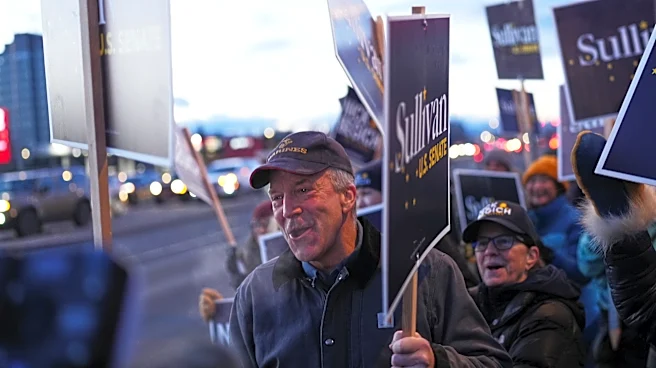
The Kids Online Safety Act (KOSA) faces ongoing challenges in Congress. While both Alaska U.S. Senators, Lisa Murkowski and Dan Sullivan, are cosponsors, the legislation has encountered resistance, with some senators blocking attempts to pass it by unanimous consent due to concerns about potential restrictions on constitutionally protected speech. For KOSA to become law, Congress must pass the legislation, and it must be signed by the President. If enacted, it would establish federal safety standards, allowing states to adopt additional protections. The outcome will determine the extent of responsibility online companies must assume for protecting young users, potentially leading to significant changes in how social media and gaming platforms are designed and regulated in the U.S.
Beyond the Headlines
The debate surrounding KOSA reflects a broader societal struggle to regulate rapidly evolving digital technologies and their impact on vulnerable populations. The tension between protecting children and safeguarding free speech online is a complex legal and ethical challenge. Civil liberties organizations have voiced concerns that companies might over-censor to avoid liability, potentially impacting access to lawful information. Conversely, proponents argue that the legislation targets platform design flaws rather than user content or opinions. This legislative push could set a precedent for how governments worldwide approach regulating online spaces for minors, potentially influencing global standards for digital child safety and corporate accountability in the tech industry. It also underscores the increasing role of state attorneys general in driving national policy on technology-related issues.