






What's Happening?
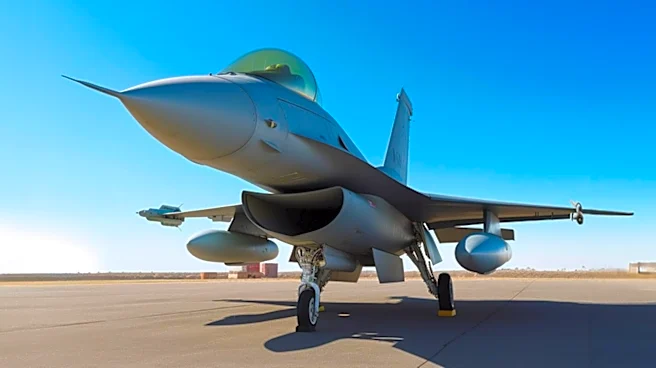
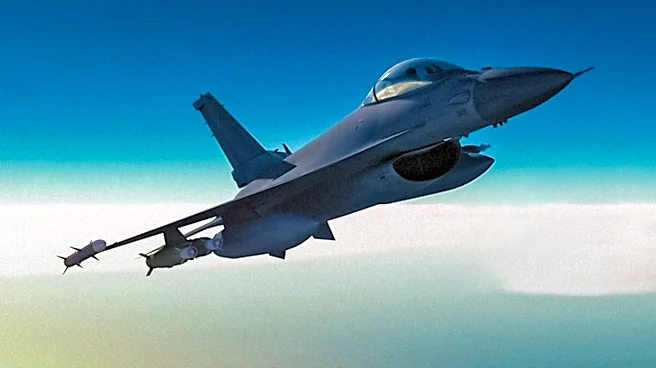
The U.S. Air Force has awarded Northrop Grumman a $79.61 million contract modification for the AN/APG-83 Scalable Agile Beam Radar (SABR) systems on F-16C/D Fighting Falcon fighters. This modification, announced on November 13, 2026, extends work in Linthicum
Heights, Maryland, through December 31, 2027, and increases the cumulative contract value from $1.98 billion to $2.061 billion. The contract continues the replacement of older mechanically scanned AN/APG-68 units with advanced active electronically scanned array (AESA) fire-control radars. The AN/APG-83 SABR offers enhanced capabilities, including longer-range target detection, faster tracking of multiple aircraft and cruise missiles, and simultaneous air-to-air and air-to-ground functions. It incorporates approximately 95% of its operating modes from the F-35's AN/APG-81 radar and can be installed without structural, power, or cooling changes to the F-16 airframe. The funding allocates $65.39 million for procurement and $14.22 million for research, development, test, and evaluation across fiscal years 2025 through 2027.
Why It's Important?
This contract modification is crucial for modernizing the U.S. Air Force's F-16 fleet, significantly enhancing its combat capabilities and extending the operational life of these aircraft. The AN/APG-83 SABR radar provides a substantial upgrade in detection and tracking, particularly against low-flying cruise missiles, which is vital for U.S. Northern Command's homeland defense requirements. The improved radar also supports advanced weapons like the AIM-120 AMRAAM missile by providing faster and more accurate target updates. This modernization effort ensures that the F-16 remains a potent asset in contemporary air combat scenarios, capable of operating effectively alongside newer fifth-generation fighters. The investment in AESA radar technology reflects a strategic commitment to maintaining air superiority and addressing evolving threats. Furthermore, the contract supports high-tech manufacturing jobs in the U.S., particularly in Maryland, and strengthens the defense industrial base.
What's Next?
The modification finances continuing procurement and engineering activities, but it does not establish an additional radar quantity, focusing instead on the ongoing Phase 3 modernization for 450 active-duty and Air National Guard F-16s. Full operational exploitation of the AN/APG-83 SABR remains contingent on further aircraft-level upgrades, including mission-computer replacements, transitions from legacy MIL-STD-1553 data buses to high-throughput Ethernet, and cybersecurity updates. These avionics integrations are necessary to unlock the radar's full processing capacity and ensure seamless operation. Additionally, Northrop Grumman's Integrated Viper Electronic Warfare Suite (IVEWS) is being developed in parallel to complement the radar by detecting electromagnetic threats, with potential U.S. Air Force installations beginning in 2028. The distinct modernization schedules for radar and electronic warfare systems indicate a phased approach to upgrading the F-16 fleet, with full capabilities expected to be realized as these complementary systems are integrated and tested.
Beyond the Headlines
The modernization of the F-16 fleet with advanced AESA radars highlights a broader trend in military aviation: extending the life and enhancing the capabilities of existing platforms through incremental technological upgrades. This approach offers a cost-effective alternative to entirely new aircraft acquisitions, allowing the U.S. Air Force to maintain a large and capable fleet. However, it also presents challenges, such as integrating cutting-edge technology with older airframe and avionics architectures, as evidenced by the current limitations of mission computers and data networks on some F-16s. The reliance on advanced radar and electronic warfare systems also underscores the increasing importance of sensor fusion and networked warfare in modern conflicts. This continuous cycle of upgrades ensures that legacy aircraft can remain relevant in a rapidly evolving threat landscape, but it also necessitates ongoing investment in research, development, and integration to fully realize the potential of these advanced systems.