





What's Happening?
The New Hampshire Charitable Foundation has significantly invested in the 'Great Bay 2030' initiative, a collaborative effort aimed at restoring and protecting the Great Bay watershed. This long-term investment, including an additional $12 million from
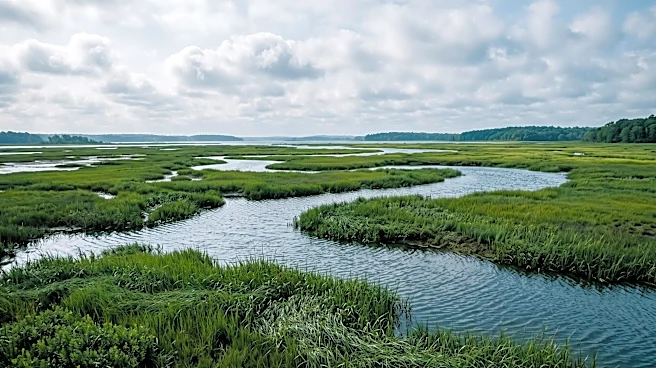
Tom Haas to establish the Great Bay Watershed Fund, has catalyzed deeper collaboration among over 70 agencies, nonprofits, and municipalities. The initiative addresses historical damage to the watershed, such as man-made alterations to salt marshes, industrial pollutants, and residential development, which have led to its classification as 'impaired' by the Environmental Protection Agency. The funding supports various projects, including marsh restoration, dam removal for habitat recovery, improved stormwater management, and land conservation, with $7.9 million invested through Great Bay 2030 attracting an additional $19 million from other sources.
Why It's Important?
The Great Bay watershed, spanning over 1,000 square miles and home to about a third of New Hampshire's population, is a critical ecological system. Its impairment affects not only local ecosystems, including oyster beds and eelgrass habitats vital for fisheries, but also the quality of life for residents. The collaborative approach fostered by Great Bay 2030 is crucial because environmental challenges often transcend jurisdictional boundaries, requiring coordinated efforts from diverse stakeholders. The significant financial investment from the Charitable Foundation and private donors like Tom Haas demonstrates a commitment to long-term environmental stewardship, providing flexible funding that enables innovative solutions. This initiative serves as a model for how philanthropic efforts can leverage broader support to address complex environmental issues, ensuring the health of natural resources for future generations and supporting local economies dependent on these resources.
What's Next?
The Great Bay 2030 initiative will continue its multi-faceted approach to watershed restoration, focusing on five interconnected areas of work. This includes ongoing marsh restoration projects, further dam removals to improve water quality and fish migration, and continued efforts in stormwater and wastewater management. The program also emphasizes stewardship through educational initiatives like the 'Great Bay Changemakers' program and the 7 Rivers to the Coast website, aiming to increase public engagement and advocacy. Additionally, the initiative will support municipalities in making neighborhoods more flood-ready and incorporating climate change education. The stewardship grant program, now assisting 20 municipalities and nonprofits, will continue to manage conserved lands, ensuring the long-term health and resilience of the Great Bay ecosystem. The collaborative framework is expected to evolve, adapting to new challenges and opportunities in environmental conservation.
Beyond the Headlines
The Great Bay 2030 initiative highlights the profound impact of human activities on natural environments over centuries and the necessity of sustained, collaborative efforts to reverse degradation. The project's success in attracting significant federal and other funding underscores the power of well-organized local initiatives to secure broader support for environmental causes. It also brings to light the ethical responsibility of current generations to mitigate past environmental damage and ensure ecological sustainability. The emphasis on educating 'Changemakers' and fostering community stewardship suggests a long-term vision that extends beyond physical restoration to cultivating a culture of environmental responsibility. This holistic approach, integrating scientific expertise, community engagement, and philanthropic support, offers valuable lessons for other regions facing similar environmental challenges, demonstrating how collective action can lead to meaningful and lasting ecological recovery.