





What's Happening?
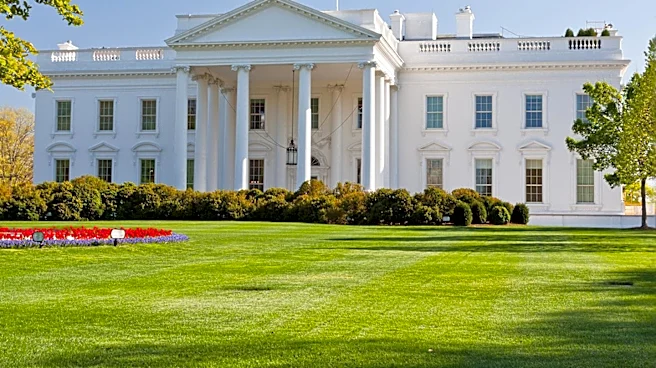
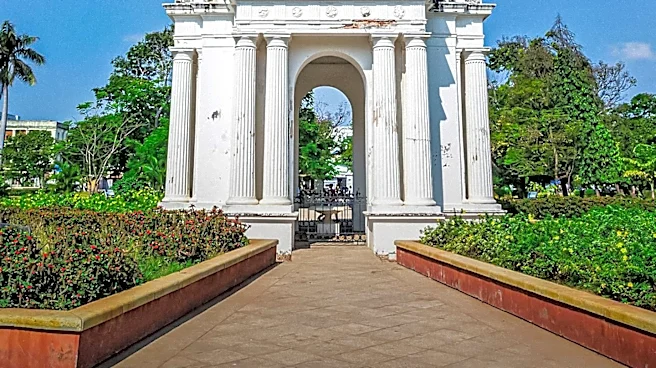
The Trump administration is moving forward with plans to construct a 'triumphal arch' on the White House grounds. This architectural addition is part of ongoing developments at the presidential residence, which also include the construction of a new heli-pad.
The Supreme Court recently allowed construction to resume on a White House ballroom in a 5-4 ruling on August 31. These projects collectively represent significant modifications to the White House complex, reflecting the administration's vision for the presidential estate. The 'triumphal arch' is a notable element among these changes, adding a distinct architectural feature to the historic grounds.
Why It's Important?
The decision to build a 'triumphal arch' at the White House carries considerable symbolic weight, potentially signaling the administration's desired legacy or its perception of national achievement. Historically, triumphal arches have been erected to commemorate military victories or significant public events, and their presence on the White House grounds could be interpreted in various ways by the public and political observers. This project, along with other construction efforts, signifies a substantial investment in altering the physical appearance of a national landmark. Such changes can influence how the presidency is perceived and how the White House functions as a symbol of American democracy. Debates may arise regarding the appropriateness of such a structure, its cost, and its long-term impact on the historical integrity of the White House.
What's Next?
The construction of the 'triumphal arch' will likely continue as planned, with its completion drawing significant public and media attention. The unveiling of the arch will undoubtedly be accompanied by discussions about its meaning and its place within the White House's historical context. The project may face ongoing scrutiny regarding its funding and design choices. Depending on its final appearance and the public's reception, the arch could become a permanent fixture, influencing future administrations' approaches to modifying the presidential grounds. The broader implications for architectural preservation and the symbolic representation of national power will likely remain subjects of discussion.
Beyond the Headlines
The construction of a 'triumphal arch' at the White House delves into deeper questions about national identity, historical memory, and the use of public space for political expression. Such a monument can be seen as an attempt to embed a particular narrative or ideology into the physical landscape of the nation's capital. This raises ethical considerations about the role of architecture in shaping collective memory and the potential for such structures to be perceived as partisan rather than universally representative. Culturally, it could spark a broader conversation about what symbols best represent the United States and its democratic values. In the long term, the arch might become a contested symbol, reflecting ongoing debates about the nation's past, present, and future direction, and how these are manifested in its most iconic institutions.