





What's Happening?
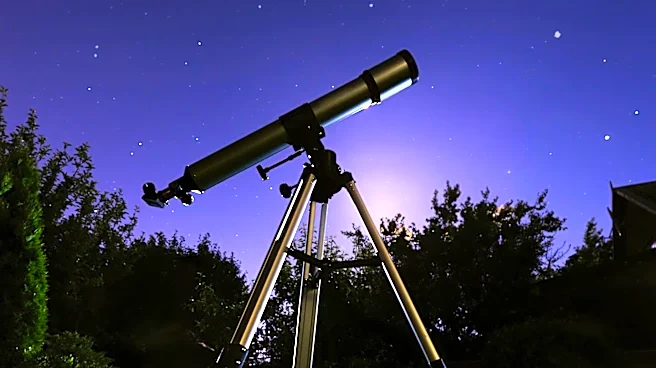
Astronomers and stargazers are increasingly turning to portable telescopes to mitigate the effects of light pollution, which is described as the biggest enemy for observing deep space. While some advanced telescopes can help, the most effective solution
is to seek out darker skies away from urban areas. Portable telescopes allow enthusiasts to travel to locations with less skyglow, such as fields outside suburbia, significantly improving the clarity and detail of celestial observations. The article highlights six such telescopes, including the Vaonis Vespera II and the DwarfLab Dwarf Mini, with some being compact enough to fit into a backpack. Most of these recommended devices are 'smart telescopes,' which can automatically locate and focus on stellar objects, simplifying the stargazing experience for users in remote locations.
Why It's Important?
The increasing prevalence of light pollution, particularly in the U.S. due to urban expansion and widespread artificial lighting, poses a significant challenge to scientific research and public engagement with astronomy. The development and accessibility of portable and smart telescopes are crucial for preserving the ability to conduct observational astronomy and for fostering public interest in space. For U.S. educational institutions and amateur astronomy clubs, these tools provide practical solutions for field trips and outreach programs, allowing students and the public to experience the cosmos without needing to travel to designated dark sky reserves. This technological advancement helps democratize access to stargazing, making it more feasible for individuals to pursue their passion for astronomy despite environmental light challenges. It also underscores the growing market for specialized outdoor and scientific equipment designed to adapt to changing environmental conditions.
What's Next?
The trend towards more portable and intelligent astronomical equipment is likely to continue, with manufacturers focusing on enhancing ease of use, automation, and optical performance in compact designs. As light pollution continues to spread, the demand for such solutions will grow, potentially driving further innovation in telescope technology, including improved light-filtering capabilities and more sophisticated automated tracking systems. Educational initiatives and conservation efforts aimed at reducing light pollution may also gain traction, complementing the use of portable telescopes. The accessibility of these devices could lead to an increase in citizen science projects, where amateur astronomers contribute valuable data to professional research. Furthermore, the market for astrotourism, which involves traveling to dark sky locations, could see a boost, with portable telescopes becoming essential gear for such expeditions.
Beyond the Headlines
The reliance on portable telescopes to escape light pollution highlights a broader environmental issue: the diminishing access to natural night skies. This loss has implications beyond astronomy, affecting nocturnal ecosystems, human health (disrupting circadian rhythms), and cultural heritage, as stargazing has been a fundamental human activity for millennia. The development of smart telescopes, which automate much of the observation process, also raises questions about the balance between technological convenience and the traditional, hands-on experience of astronomy. While these devices make stargazing more accessible, they might also alter the learning process and the deeper connection individuals form with the night sky through manual exploration. The ongoing challenge of light pollution underscores the need for sustainable urban planning and responsible lighting practices to preserve natural environments, including the night sky, for future generations.