
What's Happening?
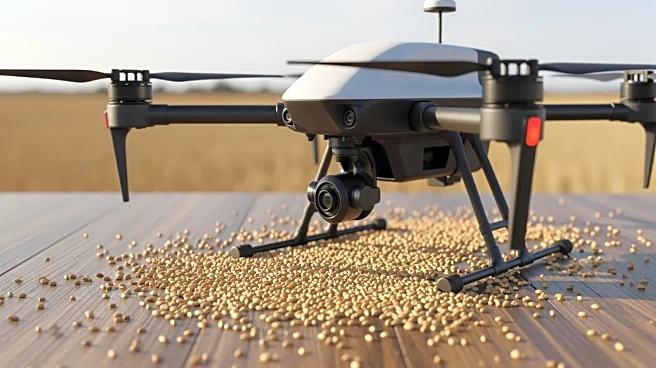
The Wisconsin Soybean Association (WSA) is closely monitoring federal proposals that aim to restrict the use of certain foreign-made drones in U.S. agriculture. These drones are crucial for precision agriculture,
helping farmers optimize input use, track crop health, and maintain operational efficiency. The proposed restrictions could significantly affect soybean producers, as foreign-made drones constitute a substantial part of the agricultural drone market. Without ready domestic alternatives, these restrictions could lead to increased costs and operational challenges for farmers who are already dealing with narrow profit margins. Doug Rebout, president of WSA, emphasized the importance of balancing national security concerns with the need for reliable technology in farming. The WSA advocates for policies that ensure farmers have access to essential precision tools and technologies.
Why It's Important?
The potential restrictions on foreign-made drones could have a profound impact on the U.S. agricultural sector, particularly for soybean farmers who rely heavily on precision technology to remain competitive. The absence of viable domestic alternatives could lead to increased operational costs and uncertainty, further straining farmers' already tight profit margins. This situation underscores the need for policymakers to consider the practical implications of security measures on the agricultural industry. Ensuring access to affordable and effective technology is crucial for sustaining modern farming operations and maintaining the competitiveness of U.S. agriculture in the global market.
What's Next?
The WSA is urging collaboration between policymakers and the agricultural sector to address security concerns while ensuring that farmers retain access to necessary technologies. This collaboration could involve developing domestic alternatives to foreign-made drones or creating policies that allow for a gradual transition to new technologies. The outcome of these discussions will be critical in determining the future landscape of precision agriculture in the U.S. and the ability of farmers to adapt to new regulatory environments.