


What's Happening?
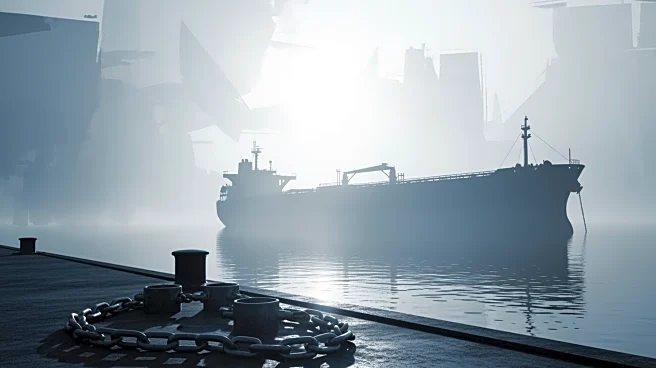
Russia has issued a warning to European Union (EU) ships in response to potential EU actions against the 'shadow fleet' of tankers transporting Russian oil. Nikolai Patrushev, a Kremlin insider, labeled Western boardings of these tankers as 'pirate attacks'
and suggested that Europe might soon engage in regular interdictions of Russia-linked tanker traffic. The shadow fleet, which operates with minimal regulation and often without valid insurance, is crucial for transporting Russian oil, especially as the EU considers shutting down legitimate maritime services for Russian oil cargoes. This move could increase reliance on the shadow fleet, prompting Europe to prepare for possible tanker interdictions at sea. Patrushev warned that if peaceful resolutions fail, Russia's navy might intervene to break any blockade, emphasizing the illegality of such actions under international law.
Why It's Important?
The tensions between Russia and the EU over maritime activities have significant implications for global trade and geopolitical stability. The EU's potential crackdown on the shadow fleet could disrupt the flow of Russian oil, affecting global oil markets and prices. This situation also highlights the broader geopolitical struggle between Russia and Western nations, with potential military escalations in maritime regions. The EU's actions could lead to increased naval confrontations, impacting international shipping routes and trade. Additionally, the strain on Russia's navy, already affected by military engagements in Ukraine and Syria, could limit its ability to respond effectively, potentially altering the balance of power in key maritime regions.
What's Next?
If the EU proceeds with its crackdown on the shadow fleet, it could lead to increased naval activity and potential confrontations in European waters. Russia may deploy more naval forces to protect its shipping routes, further straining its already stretched military resources. The international community will likely monitor these developments closely, as any escalation could have broader implications for global trade and security. Diplomatic efforts may be necessary to prevent further escalation and find a peaceful resolution to the maritime tensions.
Beyond the Headlines
The situation underscores the complex interplay between international law, maritime security, and geopolitical strategy. The concept of a 'shadow fleet' raises questions about the regulation of international shipping and the enforcement of sanctions. The potential for increased naval confrontations also highlights the need for robust international maritime governance to prevent conflicts and ensure the safe passage of goods. Furthermore, the reliance on shadow fleets reflects broader challenges in enforcing economic sanctions and the adaptability of nations in circumventing such measures.