

What's Happening?
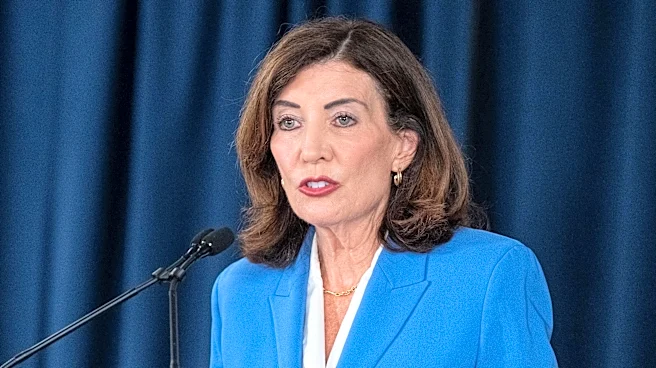
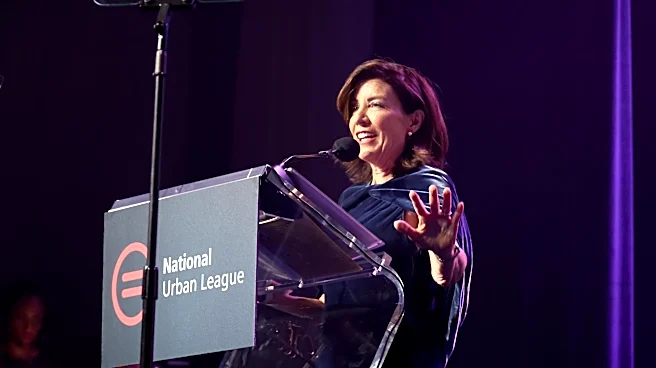
New York Governor Kathy Hochul has announced the completion of the state’s Comprehensive Advanced Nuclear Master Plan, outlining a roadmap for significant growth in nuclear power across New York. Speaking at a conference in Rochester, Governor Hochul expressed
her belief that nuclear energy is the most sustainable, reliable, and affordable way to power the state. The plan includes recommendations and next steps to achieve her pledge of building five additional gigawatts of nuclear power. This initiative marks a major step forward in the state's energy strategy, as it has been decades since a new nuclear reactor was advanced in New York. Doreen Harris, NYSERDA president and CEO, highlighted the opportunity this presents for the upstate region, emphasizing the need to rebuild the capacity for such projects. The governor acknowledged that the construction of new nuclear power plants would be costly and take decades to complete, anticipating opposition to her ambitious plans.
Why It's Important?
This master plan signifies a pivotal shift in New York's energy policy, prioritizing nuclear power as a key component of its future energy mix. If successful, it could substantially alter the state's energy landscape, potentially reducing reliance on fossil fuels and contributing to climate goals. The plan's emphasis on building five additional gigawatts of nuclear power could create thousands of jobs in construction and operation, particularly in upstate New York, offering significant economic benefits to those regions. However, the high costs associated with building new nuclear plants, which are expected to take decades to complete, raise concerns about potential impacts on utility bills for residents and businesses. The anticipated public-private partnerships required for funding also suggest a complex financial model, potentially involving state support and private investment. The strong opposition from environmental groups and some communities underscores the contentious nature of nuclear power, highlighting debates over cost, safety, and environmental impact.
What's Next?
Following the unveiling of the Comprehensive Advanced Nuclear Master Plan, the next steps involve identifying specific locations for new nuclear power plants and securing the necessary public-private partnerships for funding. Several communities across New York have already expressed interest in hosting these facilities, indicating a potential competitive process for site selection. Governor Hochul has stated that serious applicants should build community support for their proposals, suggesting that local engagement and buy-in will be crucial for project advancement. However, the plan faces significant opposition from various groups, including environmental advocates and community organizations, who have already launched campaigns against the initiative. These groups cite concerns over cost, environmental impact, and safety, promising a protracted fight against the nuclear buildout. Future developments will likely involve detailed feasibility studies, environmental impact assessments, and ongoing public discourse and potential protests as the state attempts to move from planning to implementation.
Beyond the Headlines
The push for nuclear power in New York under Governor Hochul's plan extends beyond immediate energy needs, touching upon broader themes of energy independence, technological innovation, and environmental stewardship. The state's commitment to nuclear energy could position it as a leader in advanced nuclear technology, potentially attracting further investment and research in the sector. However, the long-term implications include managing nuclear waste, a persistent challenge for the industry, and ensuring the safety and security of these facilities over their operational lifespan. The debate also highlights a fundamental tension between different approaches to climate change mitigation: while proponents view nuclear as a reliable, carbon-free energy source, opponents argue that its high cost and long development times divert resources from faster, cheaper renewable alternatives like wind and solar. This strategic direction could redefine New York's role in the national energy conversation and influence other states considering similar large-scale energy infrastructure projects.