
What's Happening?
A recent study published in Nature Ecology & Evolution has revealed significant ecological impacts from experimental deep-sea mining in the Clarion-Clipperton Zone (CCZ) of the Pacific Ocean. The study focused
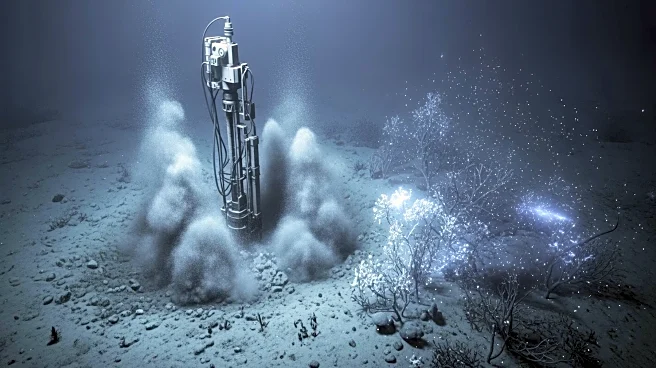
on a large-scale industrial test conducted in 2022, which involved the use of a prototype mining machine to recover over 3,000 tons of polymetallic nodules from the abyssal plain. The research employed an asymmetrical Before-After-Control-Impact (BACI) experimental design to assess the effects of mining on macrofaunal abundance and biodiversity. Results showed a 37% decrease in macrofaunal densities within the mining track, along with a 32% reduction in species richness. The study highlights the urgent need for comprehensive baseline data to distinguish mining impacts from natural variability.
Why It's Important?
The findings of this study are crucial for understanding the environmental consequences of deep-sea mining, which is poised to become a commercial industry. The significant reduction in macrofaunal density and species richness within the mining track indicates potential long-term impacts on deep-sea ecosystems. These ecosystems are vital for global biodiversity and play a role in carbon cycling and nutrient distribution. The study underscores the importance of regulatory frameworks and environmental management strategies to mitigate biodiversity loss. As the industry moves toward commercial exploitation, stakeholders including environmental groups, policymakers, and the International Seabed Authority must consider these findings to ensure sustainable practices.
What's Next?
The study calls for further research and the establishment of robust environmental management protocols to address the impacts of deep-sea mining. Future steps may involve the development of international regulations to govern mining activities and protect deep-sea biodiversity. The International Seabed Authority, responsible for licensing mining activities, may need to revise exploration regulations based on these findings. Additionally, continued monitoring and research are necessary to understand the long-term effects of sediment plumes and community structure changes. Stakeholders may also explore alternative technologies or methods to minimize ecological disruption.
Beyond the Headlines
The study highlights broader implications for marine conservation and the ethical considerations of exploiting deep-sea resources. The potential loss of biodiversity raises questions about the balance between economic interests and environmental stewardship. The findings may influence public opinion and policy debates on the sustainability of deep-sea mining. Furthermore, the research contributes to the scientific understanding of deep-sea ecosystems, which remain largely unexplored and poorly understood. This knowledge is essential for informed decision-making and the preservation of marine life.