
What's Happening?
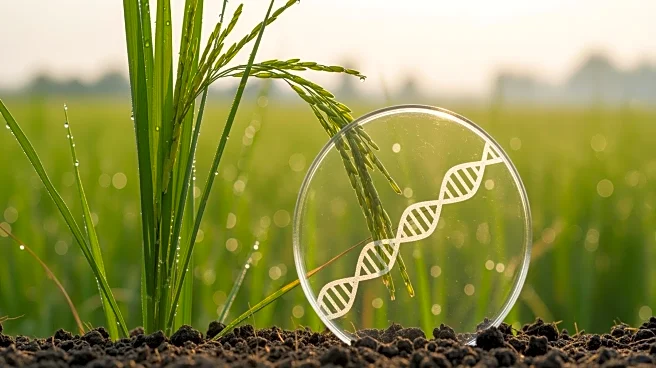
Indonesia is exploring gene editing as a potential solution to its agricultural challenges, particularly in enhancing staple crops like rice. The country faces issues such as food security, drought, pests,
and climate shifts, which have prompted scientists to consider biotechnology as a means to improve crop quality and nutritional security. Gene editing, which involves making small, targeted changes within an organism's DNA, is seen as a safer and more acceptable alternative to traditional genetic modification methods. Despite the potential benefits, there are concerns about the social and ethical implications of this technology, including issues of access, control, and the impact on smallholder farmers who dominate Indonesia's agricultural landscape.
Why It's Important?
The adoption of gene editing in Indonesia could significantly impact the country's food security and reduce its reliance on imports of key commodities like corn and soybeans. This technology has the potential to increase agricultural productivity and support smallholder farmers, who are crucial to the country's food system. However, the success of gene editing depends on addressing broader social and economic issues, such as unequal land access and the potential for 'capital bias,' where farmers might become dependent on companies for seeds and technology. Ensuring that the benefits of gene editing are equitably distributed is essential for its acceptance and effectiveness in improving Indonesia's agricultural sector.
What's Next?
For gene editing to be successful in Indonesia, it is crucial to engage with various stakeholders, including farmers, government officials, researchers, and consumer associations, to build a shared understanding of the technology's role in agriculture. Public engagement and transparent communication are necessary to address concerns and ensure that the technology is implemented in a way that benefits all parties involved. The government and researchers must focus on building trust and fostering dialogue with local communities to ensure that gene editing contributes to a fair and sustainable food system.
Beyond the Headlines
The introduction of gene editing in Indonesia highlights the need for a balanced approach that combines scientific innovation with social inclusion. The technology's success will depend on understanding the specific social and cultural contexts in which it is applied. By involving women farmers and other key community members in the decision-making process, Indonesia can leverage their resilience and knowledge to create a more inclusive and effective agricultural system. This approach will help ensure that gene editing is not just a technical fix but a tool for achieving broader social and economic goals.