





What's Happening?
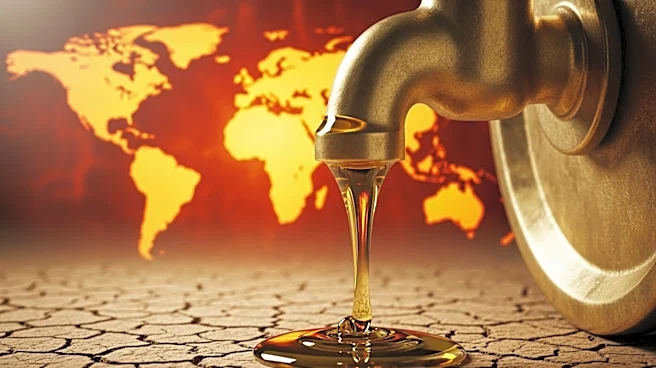
The ongoing conflict involving Iran has led to significant economic repercussions globally, with a notable impact on oil prices. The International Energy Agency reports a substantial shortfall in global oil deliveries from the Persian Gulf, leading to increased
oil prices. This has resulted in U.S. consumers spending an additional $40 billion on gasoline since the conflict began. The U.S. has seen a rise in oil exports, generating approximately $50 billion in revenue. However, American agriculture is struggling with increased costs for fertilizer and diesel, potentially leading to lower crop yields and higher food prices. The conflict has also affected global bond markets, with rising inflation and interest rates impacting borrowing costs in the U.S.
Why It's Important?
The economic impact of the Iran conflict is significant for the U.S., affecting both consumers and industries. Higher gasoline prices disproportionately affect lower-income households, altering travel patterns and increasing financial strain. The agricultural sector faces challenges due to rising input costs, which could lead to higher food prices, affecting both domestic and global markets. The increase in U.S. oil exports highlights the country's role in the global energy market, but the benefits are offset by the burden on consumers. Additionally, rising bond yields and inflationary pressures could lead to higher borrowing costs, impacting homebuyers and businesses. These developments underscore the interconnectedness of global events and their domestic economic implications.
What's Next?
As the conflict continues, the U.S. may need to navigate the dual challenges of benefiting from increased energy exports while managing domestic economic pressures. Policymakers might consider measures to mitigate the impact on consumers, particularly lower-income households. The agricultural sector may require support to address rising costs and potential yield reductions. Monitoring global oil supply and demand dynamics will be crucial, as will addressing inflationary pressures to stabilize the economy. The situation may also prompt discussions on energy independence and strategic reserves to buffer against future disruptions.
Beyond the Headlines
The Iran conflict highlights broader geopolitical and economic vulnerabilities, emphasizing the need for diversified energy sources and resilient supply chains. The situation also raises questions about the sustainability of current economic models reliant on fossil fuels, potentially accelerating the transition to renewable energy. The impact on global food security, particularly in the Global South, underscores the importance of international cooperation in addressing shared challenges. The conflict serves as a reminder of the complex interplay between geopolitics and economics, with far-reaching consequences for global stability and prosperity.