


What's Happening?
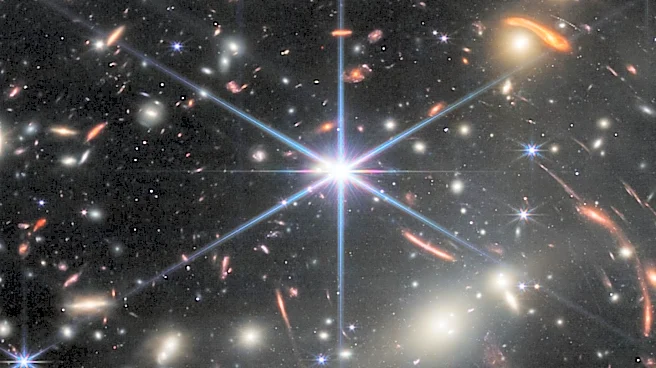
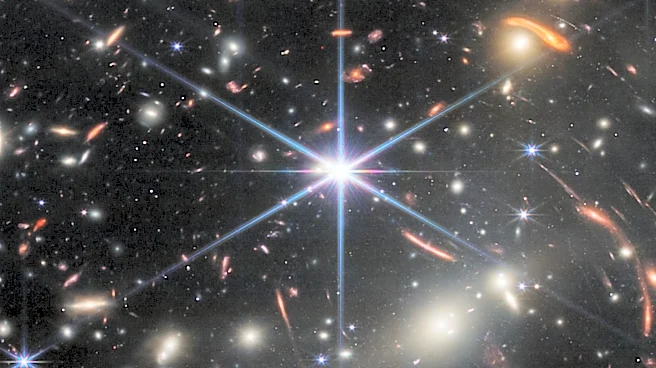
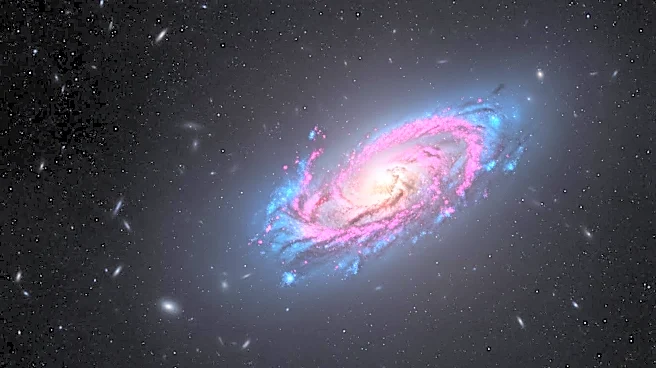
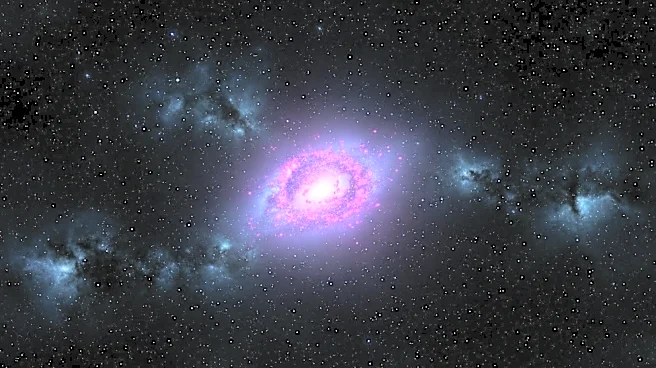
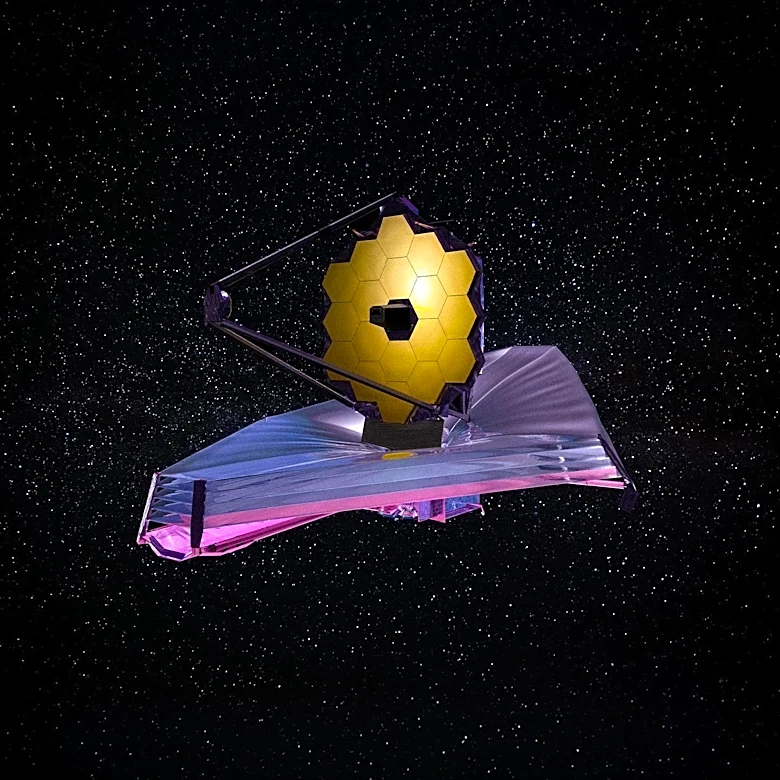
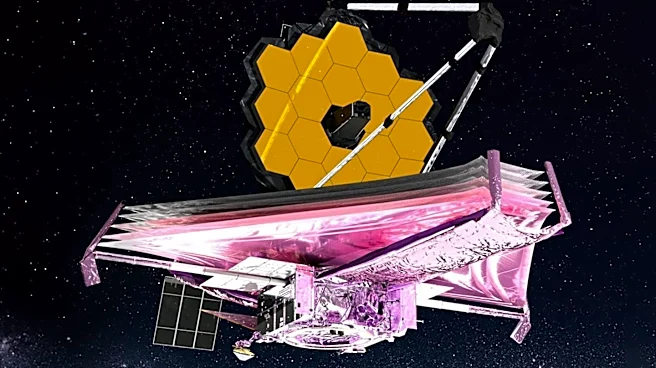
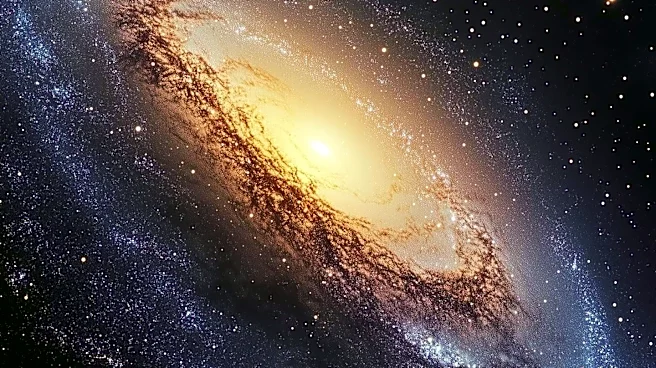
Astronomers using NASA's Hubble Space Telescope have detected ionizing ultraviolet photons from an ancient galaxy, MXDFz4.4, which was previously thought to be invisible due to cosmic fog. This discovery, made possible with data from the James Webb Space Telescope and
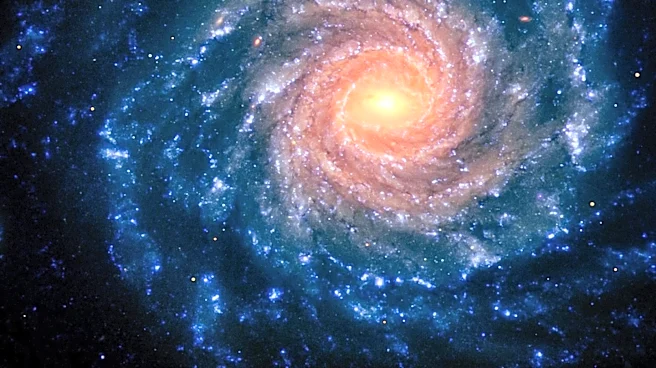
the European Southern Observatory's Very Large Telescope, marks the earliest detection of such light, dating back to 250 million years after the Epoch of Reionization. The galaxy, significantly smaller than the Milky Way but with a high star-formation rate, is able to emit ionizing light through the intergalactic medium, challenging previous assumptions about the visibility of early galaxies.
Why It's Important?
This finding is crucial for understanding the early universe, particularly the Epoch of Reionization, a period when the first stars and galaxies ionized the surrounding hydrogen fog, allowing light to travel freely. The ability of MXDFz4.4 to emit ionizing light suggests that similar galaxies may have played a significant role in this cosmic transition. The discovery also highlights the potential for more such galaxies to be identified, offering new insights into the formation and evolution of the universe. This could reshape current models of cosmic history and influence future astronomical research.
What's Next?
Researchers anticipate that further studies will focus on identifying more galaxies like MXDFz4.4 to better understand their role in the early universe. The combination of data from multiple telescopes will continue to be crucial in these efforts. As technology advances, astronomers hope to refine their methods for detecting and analyzing distant galaxies, potentially uncovering new aspects of cosmic evolution. The findings may also prompt revisions in theoretical models of the universe's development during the Epoch of Reionization.