
What's Happening?
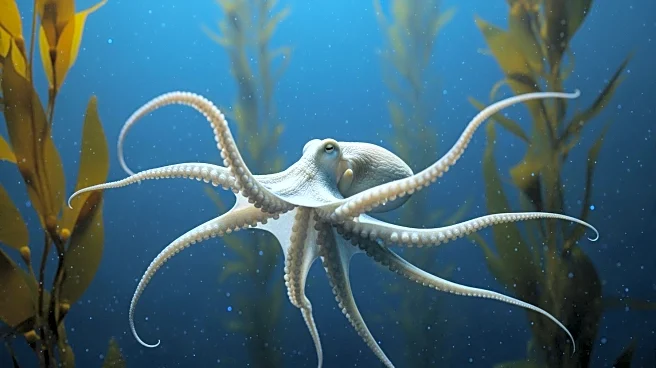
On November 6, 2025, researchers from the Monterey Bay Aquarium Research Institute (MBARI) observed a rare seven-arm octopus, scientifically known as Haliphron atlanticus, during an expedition in Monterey Bay.
The sighting occurred at a depth of approximately 700 meters, marking only the fourth time this research team has encountered the species in four decades. The octopus was recorded holding a red helmet jellyfish, a bioluminescent creature that typically avoids sunlight. This observation provided further insight into the octopus's diet, which includes gelatinous animals. The seven-arm octopus is notable for its size, with females growing up to 13 feet long and weighing 165 pounds. Despite its name, the species has eight arms, but males often keep one arm hidden, giving the appearance of having only seven.
Why It's Important?
The discovery of the seven-arm octopus in Monterey Bay is significant for marine biology, as it enhances understanding of deep-sea ecosystems and the biodiversity within them. The octopus's diet, consisting of gelatinous animals, challenges previous assumptions about the nutritional needs of large marine species. This finding could influence future research on deep-sea food webs and the ecological roles of gelatinous organisms. Additionally, the documentation of such rare species underscores the importance of deep-sea exploration and the potential for discovering new marine life forms. This research contributes to the broader scientific knowledge of oceanic life and may inform conservation efforts aimed at protecting deep-sea habitats.
What's Next?
Further research is likely to focus on the behavioral patterns and ecological impact of the seven-arm octopus. Scientists may conduct additional expeditions to observe the species in different environments and at varying depths. These studies could provide more comprehensive data on the octopus's interactions with other marine species and its role in the ocean's twilight zone. The findings may also prompt discussions on the conservation of deep-sea ecosystems, particularly in light of human activities such as deep-sea mining and fishing, which could threaten these habitats. Continued exploration and documentation are essential for developing effective conservation strategies.