






What's Happening?
Gulf stock markets experienced a rise on May 3, 2026, with Saudi Arabia's benchmark index increasing by 0.1% to 11,193. However, the gains were limited due to ongoing uncertainty surrounding the US-Iran situation. A senior Iranian official proposed a plan
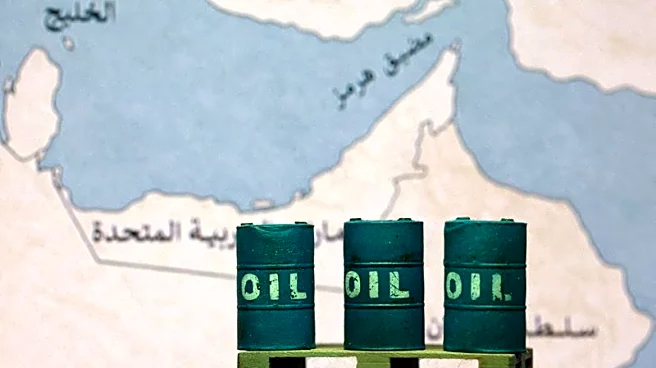
to reopen shipping through the Strait of Hormuz and lift the U.S. blockade on Iran, which has been rejected by President Trump. This proposal also suggested postponing negotiations over Iran's nuclear program. Despite the geopolitical tensions, the Qatari index rose by 0.4%, with Qatar National Bank seeing a 1.4% increase. Meanwhile, oil prices saw a decline, with Brent crude futures for July settling at $108.17 per barrel, down by 2.02%.
Why It's Important?
The developments in the Gulf stock markets are significant as they reflect the broader economic impact of geopolitical tensions between the U.S. and Iran. The uncertainty surrounding potential U.S. military actions and the proposed Iranian plan affects investor confidence and market stability. The limited gains in Saudi Arabia's stock market, despite a rise in the Saudi Arabian Mining Company, highlight the cautious approach of investors amid these tensions. The situation also impacts global oil prices, which are sensitive to Middle Eastern geopolitical developments. The outcome of these tensions could have far-reaching effects on global energy markets and economic stability.
What's Next?
The next steps involve monitoring the U.S. response to Iran's proposal and any potential military actions that could escalate tensions further. Investors and market analysts will be closely watching for any diplomatic developments or changes in U.S. policy that could influence market dynamics. Additionally, the impact on oil prices will be a key factor to watch, as further fluctuations could affect global economic conditions. Stakeholders in the energy sector and international trade will need to prepare for potential disruptions and adjust their strategies accordingly.