







What's Happening?
Bangladesh's trade deficit has widened by nearly 24% to $23.98 billion in FY 2025-26, driven by a decline in export revenues and a drop in capital machinery imports. The country's export performance fell short of the $55 billion target, with total merchandise
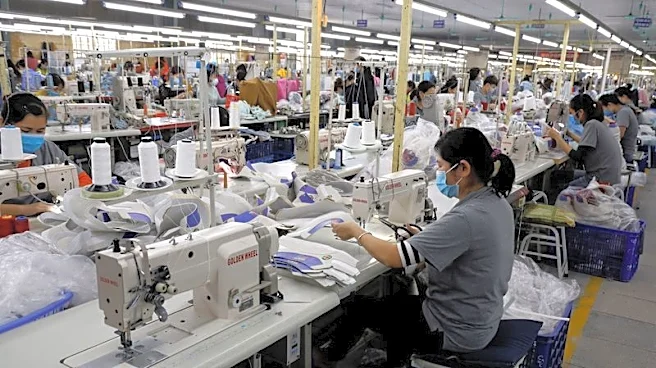
exports reaching approximately $48 billion. The Ready-Made Garment (RMG) sector, a major export contributor, faced challenges due to global competition and domestic issues such as high interest rates and energy shortages. Despite these challenges, a record surge in remittances provided some relief to the economy.
Why It's Important?
The widening trade deficit highlights the vulnerabilities in Bangladesh's economic structure, particularly its heavy reliance on the RMG sector. The decline in capital machinery imports signals a slowdown in industrial investment, which could impact future production and export capabilities. The situation underscores the need for economic diversification and policy reforms to enhance competitiveness. The record remittances, while providing temporary relief, may not be sustainable in the long term, emphasizing the need for structural changes in the economy.
What's Next?
Bangladesh is taking steps to address these challenges by launching its first Free Trade Zone (FTZ) to attract investment and improve trade efficiency. The government is also focusing on reducing business costs, improving logistics, and diversifying export products. These measures aim to enhance the country's competitiveness in the global market. However, the success of these initiatives will depend on effective policy execution and the ability to adapt to global economic shifts.