






What's Happening?
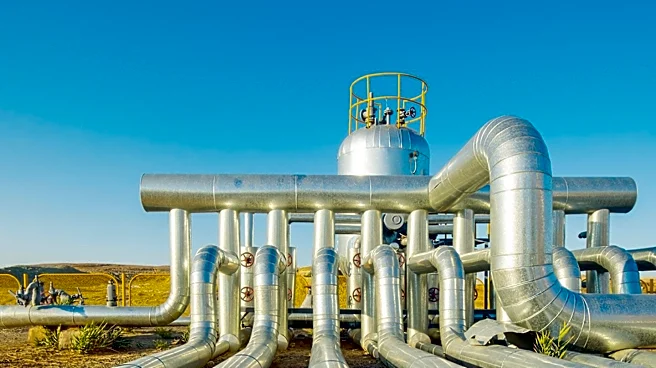
Ankara and Baghdad have signed a one-year agreement to maintain the flow of crude oil through the Kirkuk-Ceyhan Oil Pipeline, which connects Iraq to Turkiye. This deal, involving Turkish state firm BOTAS and Iraq’s state oil companies SOMO and NOC, was
finalized shortly after a high-level meeting between Turkish President Recep Tayyip Erdogan and Iraqi Prime Minister Ali al-Zaidi in Ankara. The agreement ensures a daily capacity of 750,000 barrels, although the pipeline can handle up to 1.5 million barrels per day. The deal comes in the wake of Iran's effective closure of the Strait of Hormuz, which disrupted Iraq's oil exports and forced the country to seek alternative routes. The pipeline currently carries about 170,000 barrels per day, primarily from Iraq's Kurdistan region, which has been subject to attacks since the conflict with Iran began.
Why It's Important?
This agreement is crucial for Iraq as it seeks to stabilize its oil exports, which have been severely impacted by regional conflicts and geopolitical tensions. The closure of the Strait of Hormuz by Iran earlier this year led to a significant drop in Iraq's oil revenues, from $6 billion to under $2 billion monthly. By securing this pipeline deal, Iraq aims to ensure a steady flow of oil to the Mediterranean, thereby safeguarding its economic interests. For Turkiye, the deal strengthens its strategic position in the global oil market and enhances its role as a key transit country for energy resources. The agreement also underscores the importance of regional cooperation in maintaining energy security amid global market fluctuations.
What's Next?
Both countries are expected to work towards a more comprehensive framework agreement that includes cooperation in sectors such as oil, electricity, and water resources. This could lead to further economic integration and development in the region. Additionally, discussions are ongoing to extend the pipeline to carry crude from Iraq's southern fields, which would increase the pipeline's utilization and further stabilize Iraq's oil exports. The success of this agreement could also influence other regional energy partnerships and encourage similar collaborations.