





What's Happening?
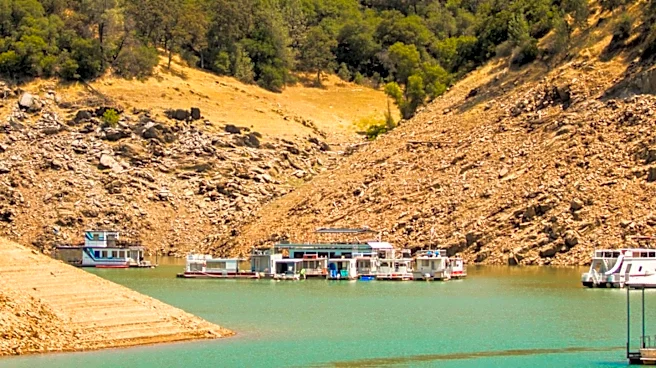
In England, a hosepipe ban affecting 40% of the population has been implemented due to prolonged heatwaves and drought conditions. However, exemptions for private schools, golf courses, and sports pitches have sparked controversy. These areas remain green
while public parks and residential lawns suffer. The disparity has led to public outcry, with critics arguing that the exemptions highlight systemic inequalities in water management. The situation underscores the need for a more equitable approach to water usage, especially during times of scarcity.
Why It's Important?
The exemptions granted to private institutions during the hosepipe ban raise questions about fairness and resource allocation. This situation highlights broader issues of inequality in access to essential resources, which can exacerbate social tensions. The controversy also points to the need for comprehensive water management policies that prioritize sustainability and equity. As climate change continues to impact water availability, addressing these disparities becomes increasingly urgent to ensure that all communities have fair access to water resources.
What's Next?
The public backlash against the exemptions may prompt policymakers to reevaluate water management strategies and consider more equitable solutions. This could involve revising exemption criteria or investing in infrastructure improvements to reduce water waste. Additionally, the situation may lead to increased advocacy for public ownership of water resources, aiming to ensure that water management prioritizes public interest over private gain. Ongoing discussions and potential policy changes will be crucial in addressing the challenges posed by water scarcity and climate change.