



What's Happening?
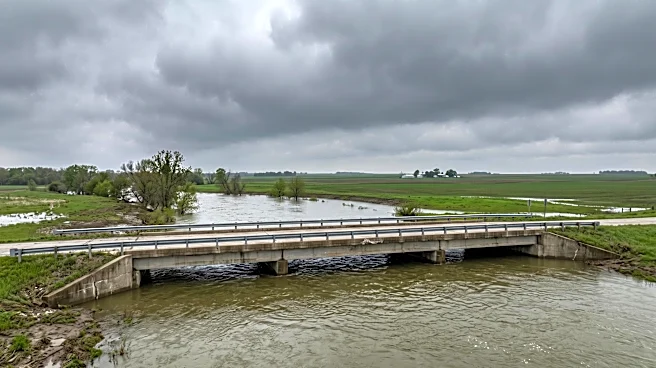
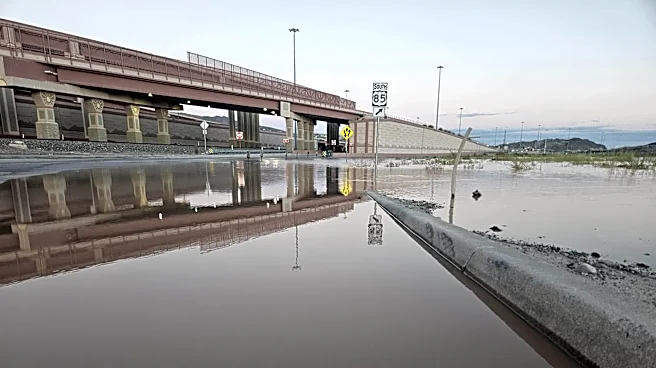
Route 60 west of Socorro, New Mexico, leading to Magdalena, has reopened to traffic after repairs were completed on a flood-damaged bridge. The New Mexico Department of Transportation (NMDOT) announced the reopening on Saturday, though certain restrictions
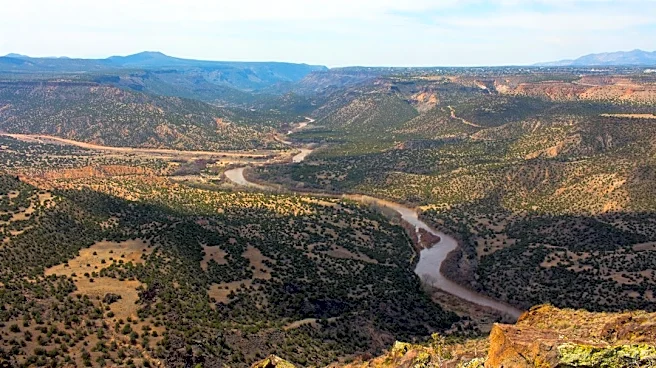
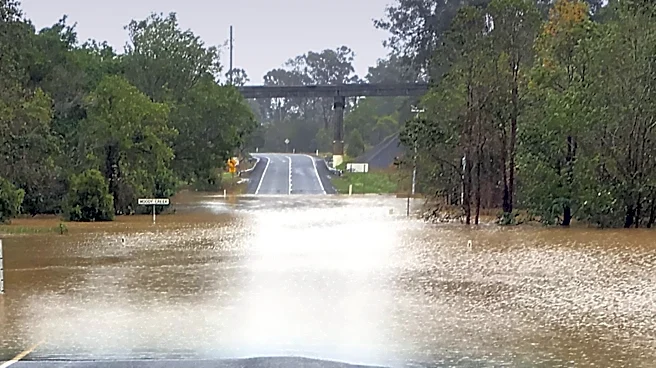
remain in place. Passenger vehicles and 'approved weighted trucks' are now permitted to use the route. However, oversized and overweight commercial motor vehicles are still restricted. The route had been closed since last Wednesday due to severe damage to the bridge at Box Canyon, located between Socorro and Magdalena. Heavy rainfall caused significant erosion to the bridge’s supporting embankment. NMDOT crews worked to repair the damage by bringing in backfill and large rocks to rebuild the eroded areas. Additionally, large rocks have been strategically placed to protect the roadway from potential future water flows. Despite the reopening, a flood warning remains in effect in Socorro, as runoff from several days of heavy rains continues to flow through the Rio Puerco tributary into the Rio Grande.
Why It's Important?
The reopening of Route 60 is a critical development for transportation and commerce in central New Mexico. Its closure had forced motorists to take lengthy detours, often on unpaved and muddy roads, causing significant inconvenience and increased travel times. The route serves as a vital link for local communities and commercial traffic, and its disruption had economic implications for businesses relying on efficient transportation. The continued restriction on oversized and overweight commercial vehicles indicates that while the immediate structural integrity of the bridge has been addressed, full capacity has not yet been restored, which could still impact certain industries. The NMDOT's proactive measures to protect the roadway from future flooding, such as strategically placing large rocks, highlight the ongoing challenges posed by extreme weather events and the need for resilient infrastructure. The persistent flood warning in Socorro underscores the broader environmental context, indicating that the region remains susceptible to further flooding despite the road repairs.
What's Next?
While Route 60 has reopened, drivers are encouraged to exercise caution, as speeds on the bridge have been reduced to 45 MPH. The NMDOT will likely continue to monitor the bridge's condition and the surrounding area, especially given the ongoing flood warning in Socorro. Further assessments may be conducted to determine when all restrictions, particularly for oversized and overweight commercial vehicles, can be lifted. The strategic placement of rocks suggests a long-term effort to mitigate future flood damage, but the effectiveness of these measures will be tested by subsequent rainfall events. Local communities and businesses will benefit from the restored access, but the lingering flood warning means that vigilance against potential new disruptions will be necessary. The incident may also prompt a review of infrastructure resilience in other flood-prone areas across New Mexico, potentially leading to further preventative measures or upgrades.
Beyond the Headlines
The damage to Route 60's bridge due to heavy rainfall is indicative of a growing national concern regarding aging infrastructure and the increasing frequency of extreme weather events. As climate patterns shift, regions previously less prone to severe flooding are experiencing more intense and unpredictable precipitation. This places immense strain on existing transportation networks, many of which were not designed to withstand such conditions. The incident in New Mexico highlights the economic and social costs associated with infrastructure failures, including disruptions to supply chains, increased travel burdens, and the significant financial investment required for emergency repairs. It also underscores the broader challenge of balancing immediate repair needs with long-term climate adaptation strategies. The need for resilient infrastructure that can withstand future climate impacts is becoming paramount, prompting discussions about federal and state funding for upgrades and the integration of climate science into infrastructure planning and design.