



What's Happening?
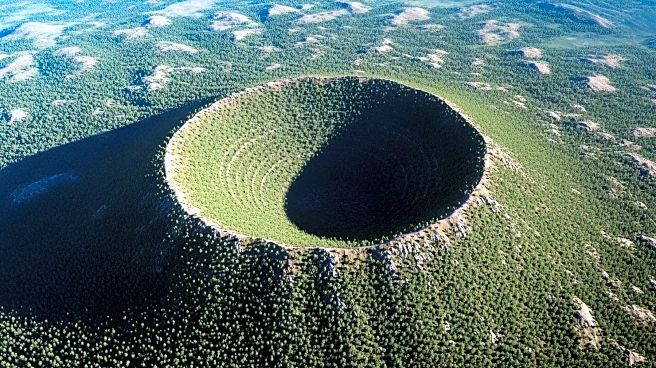
A recent satellite image from the European Union's Copernicus Sentinel-2 mission has captured the Manicouagan crater in Quebec, Canada, in striking false-color detail. The image highlights the crater's circular structure, formed by an asteroid impact
approximately 214 million years ago. The false-color rendering enhances the visibility of different land features, with snow appearing white, ice blue, and vegetation red. This crater, often referred to as the 'eye of Quebec,' is a significant geological feature and part of a UNESCO-designated biosphere reserve.
Why It's Important?
The Manicouagan crater is not only a geological marvel but also an important ecological site. The satellite imagery provides valuable data for scientists studying Earth's geological history and current environmental conditions. The crater's unique structure offers insights into the impact events that have shaped our planet. Additionally, the surrounding biosphere reserve supports diverse ecosystems, highlighting the intersection of natural history and ecological conservation. This imagery aids in monitoring environmental changes and managing natural resources effectively.