
What's Happening?
A humpback whale, nicknamed Timmy, was successfully released into the North Sea after being stranded in shallow waters near Germany since March. The whale was first spotted near Germany's Baltic Sea coast
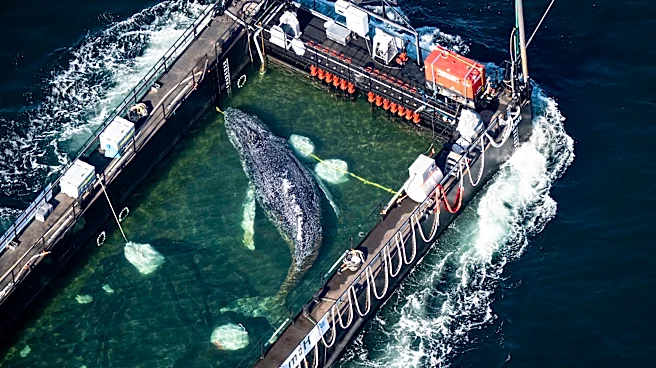
and had repeatedly become stranded, leading to concerns about its health. A private initiative, approved by Germany's Mecklenburg-Western Pomerania state, transported Timmy using a barge to deeper waters off the coast of Denmark. The operation was controversial, with debates on whether to let the whale die naturally or attempt a rescue. Despite warnings from some scientists, the rescue was carried out, and Timmy was released approximately 70 kilometers from Skagen, Denmark. A GPS transmitter was attached to monitor the whale's movements.
Why It's Important?
The successful release of Timmy highlights the complexities and ethical considerations involved in wildlife rescue operations. The situation drew significant media attention and public interest, reflecting broader concerns about marine life conservation. The operation underscores the challenges faced by marine animals due to environmental changes and human activities. The debate over Timmy's rescue also illustrates the differing perspectives within the scientific community regarding intervention in natural processes. The use of technology, such as GPS tracking, in monitoring wildlife post-rescue, could provide valuable data for future conservation efforts.
What's Next?
Following Timmy's release, the whale is expected to swim towards the Arctic along the Norwegian coast. The attached GPS transmitter will allow researchers and conservationists to track its movements and gather data on its health and behavior. This information could inform future rescue operations and contribute to understanding the impacts of environmental changes on marine life. The case may also prompt discussions on policy and funding for wildlife rescue initiatives, as well as the role of private entities in such efforts.